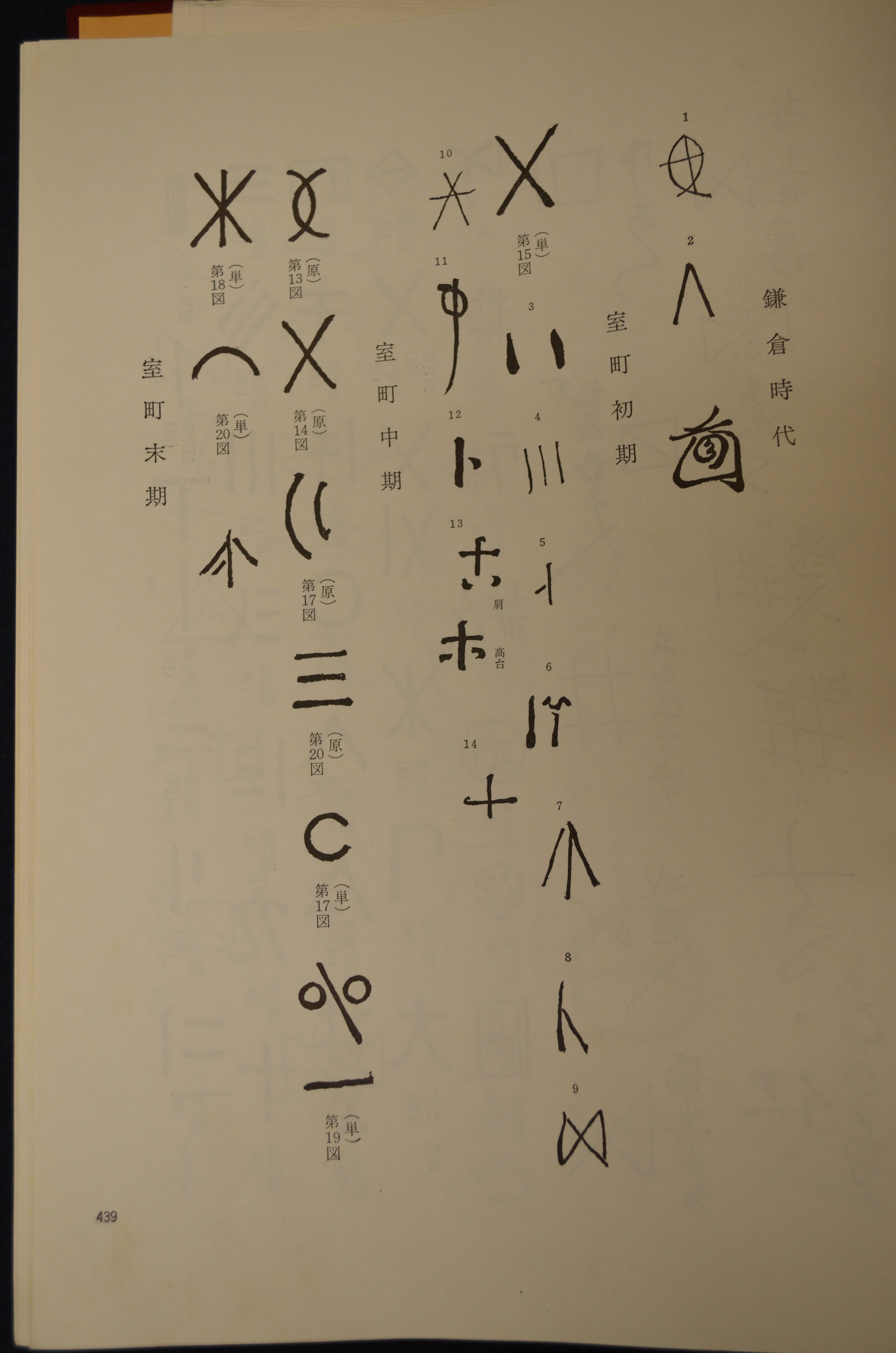
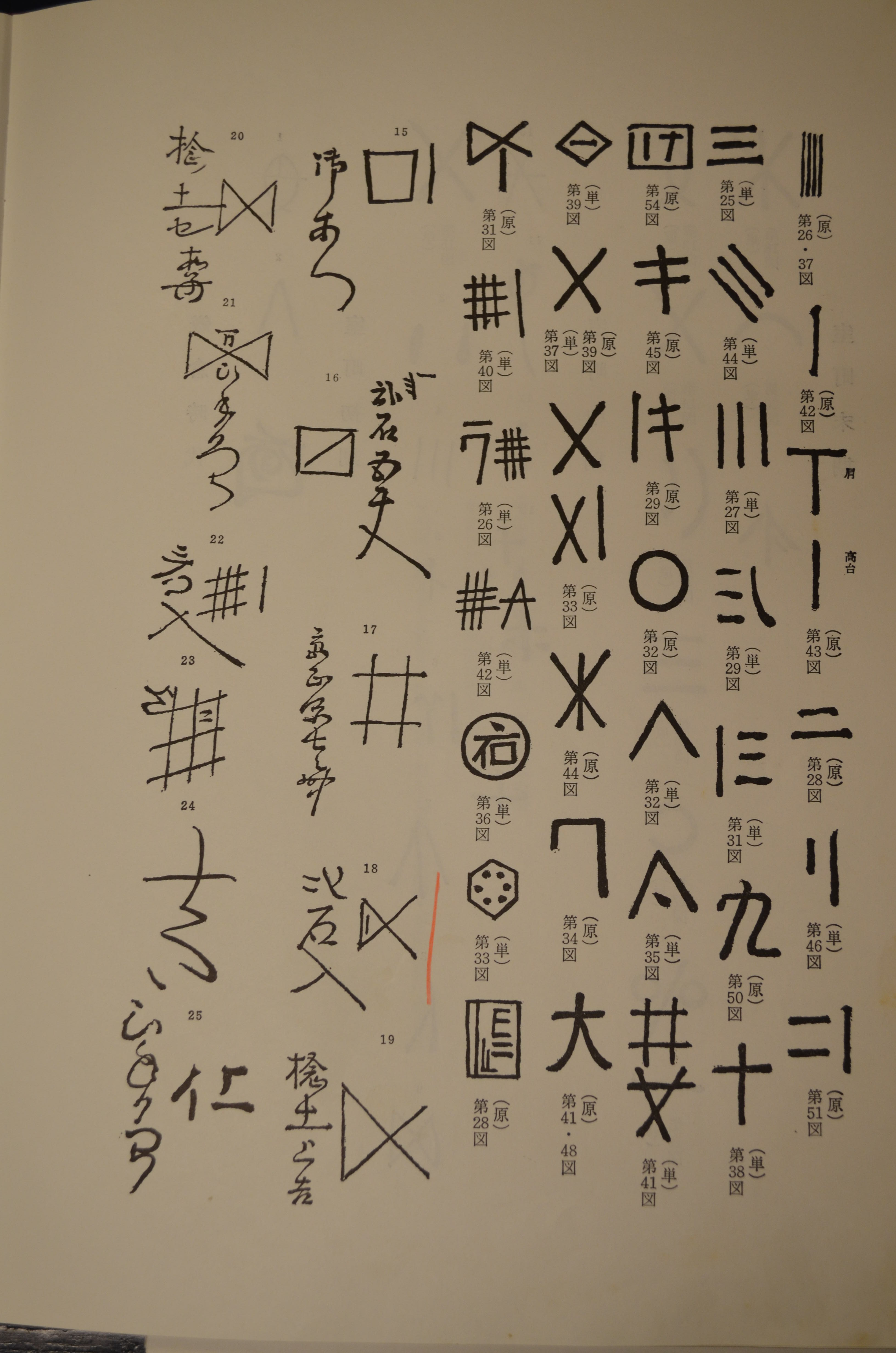
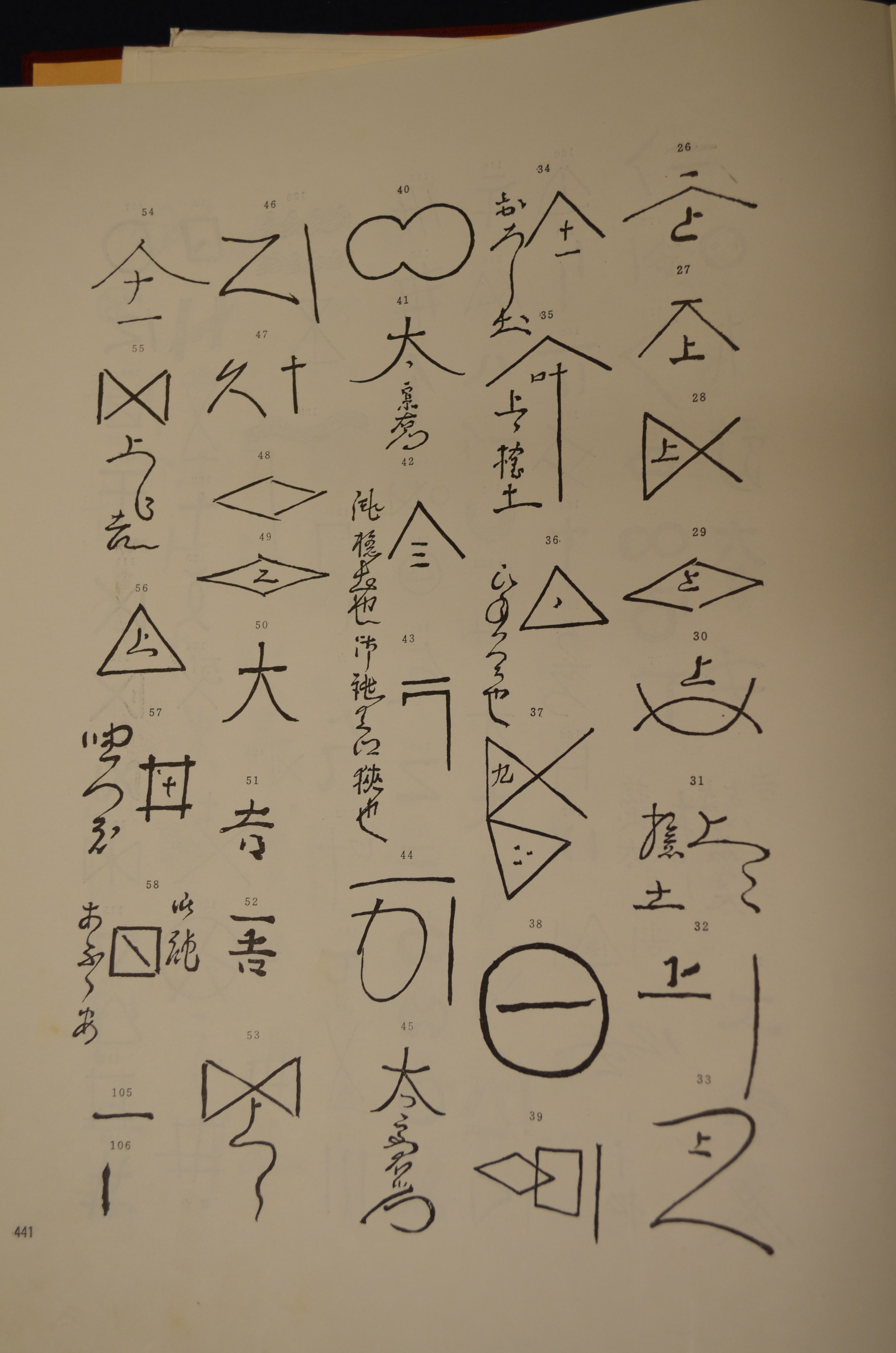
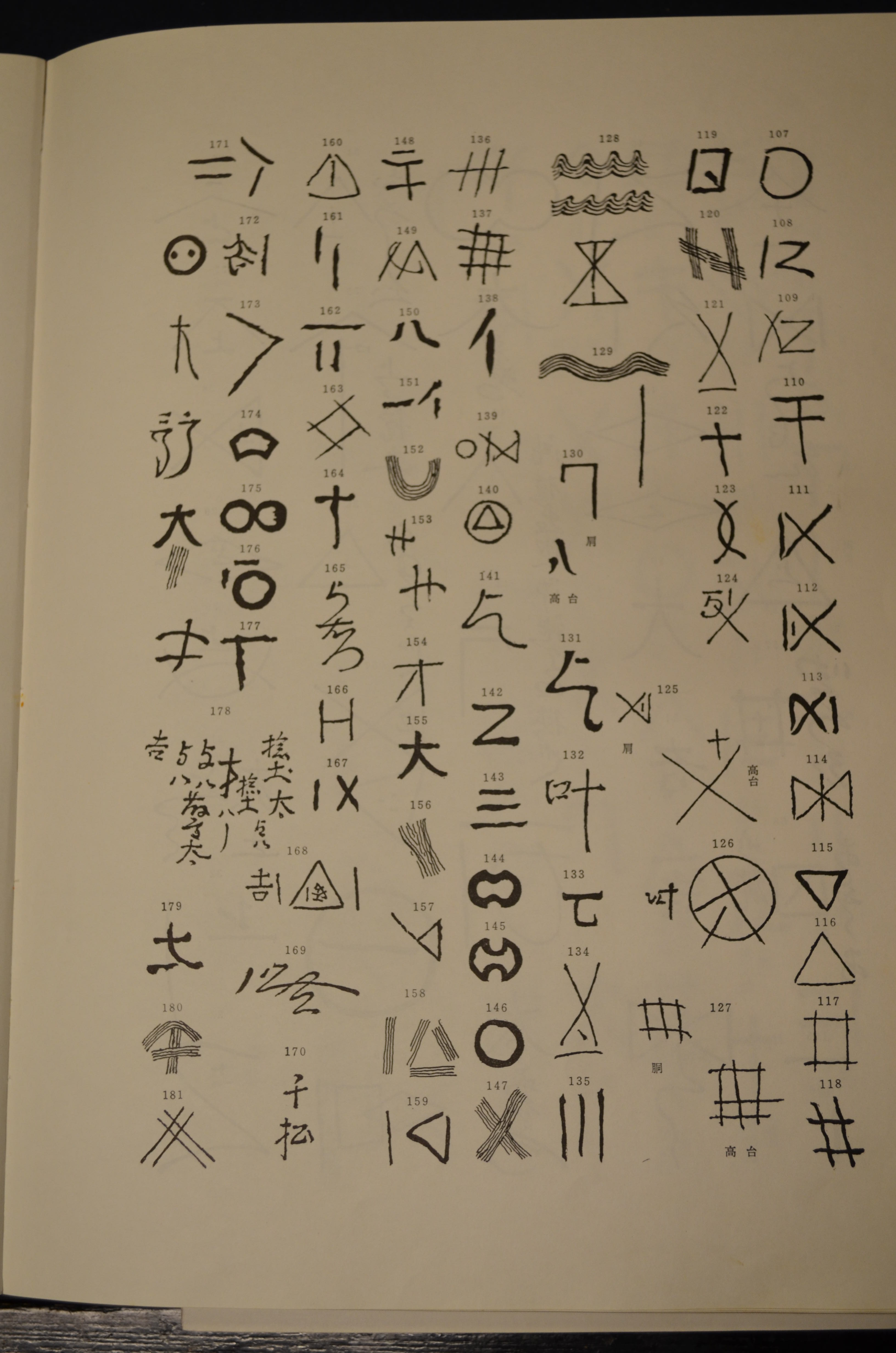
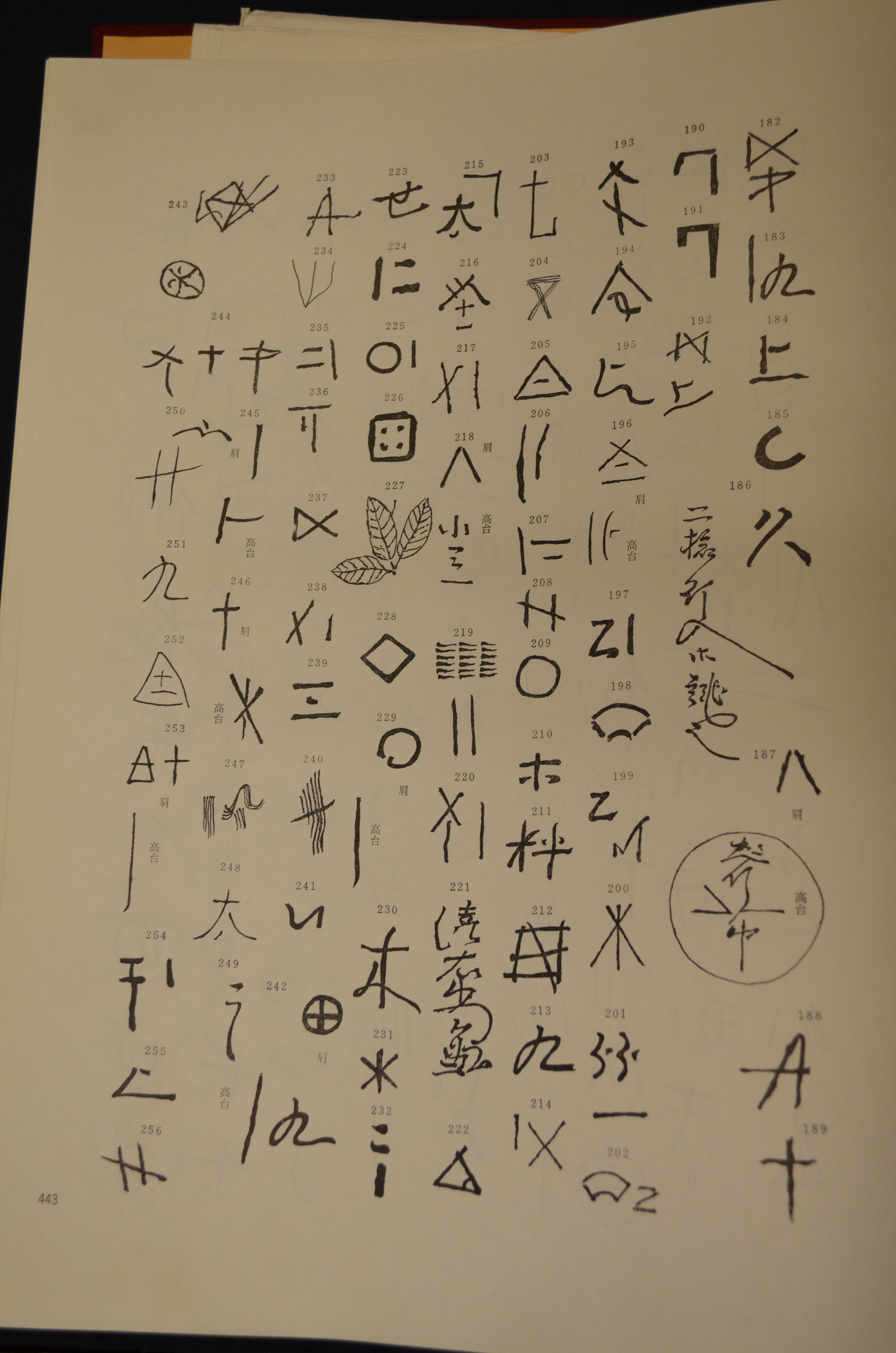
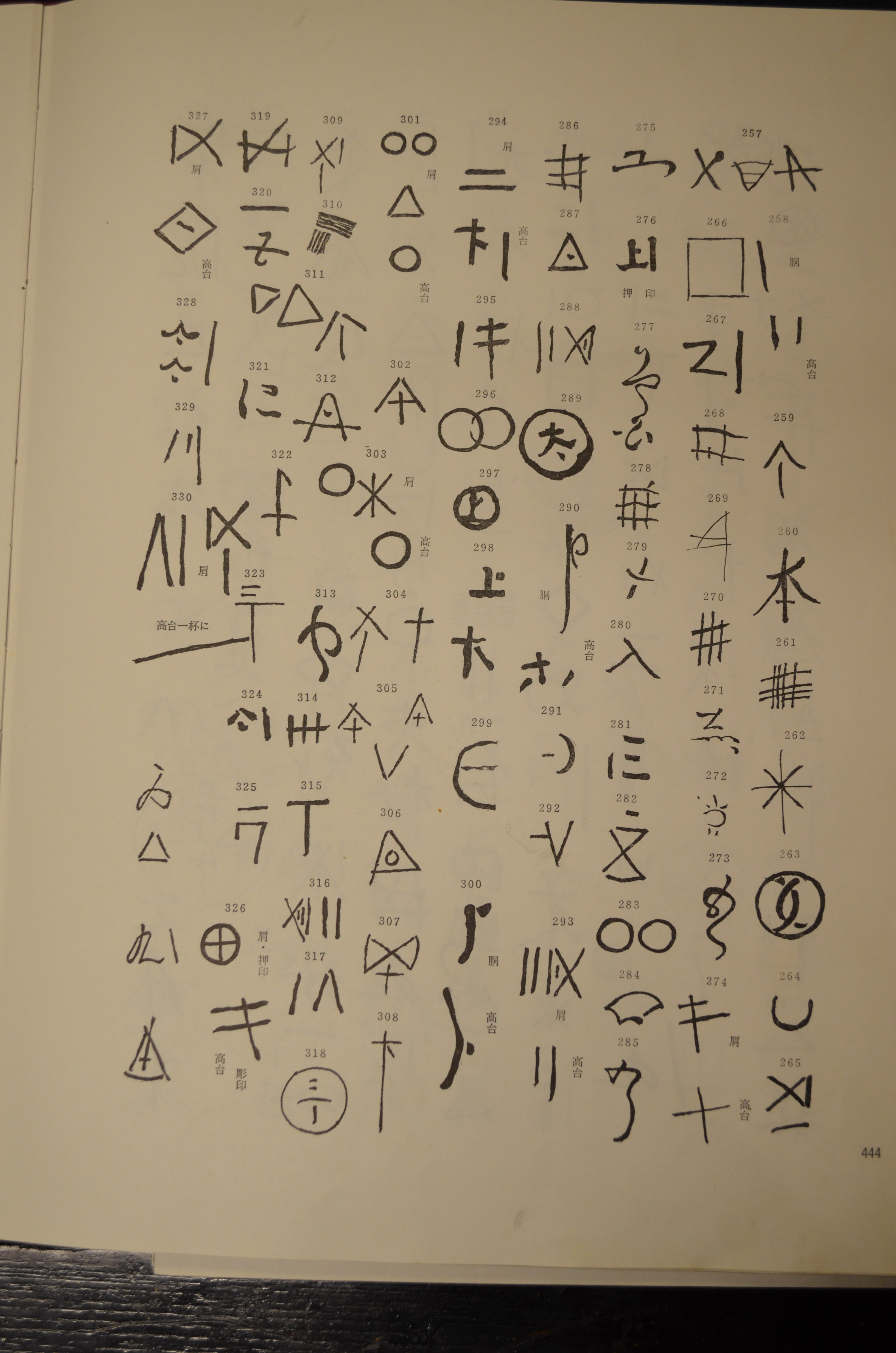
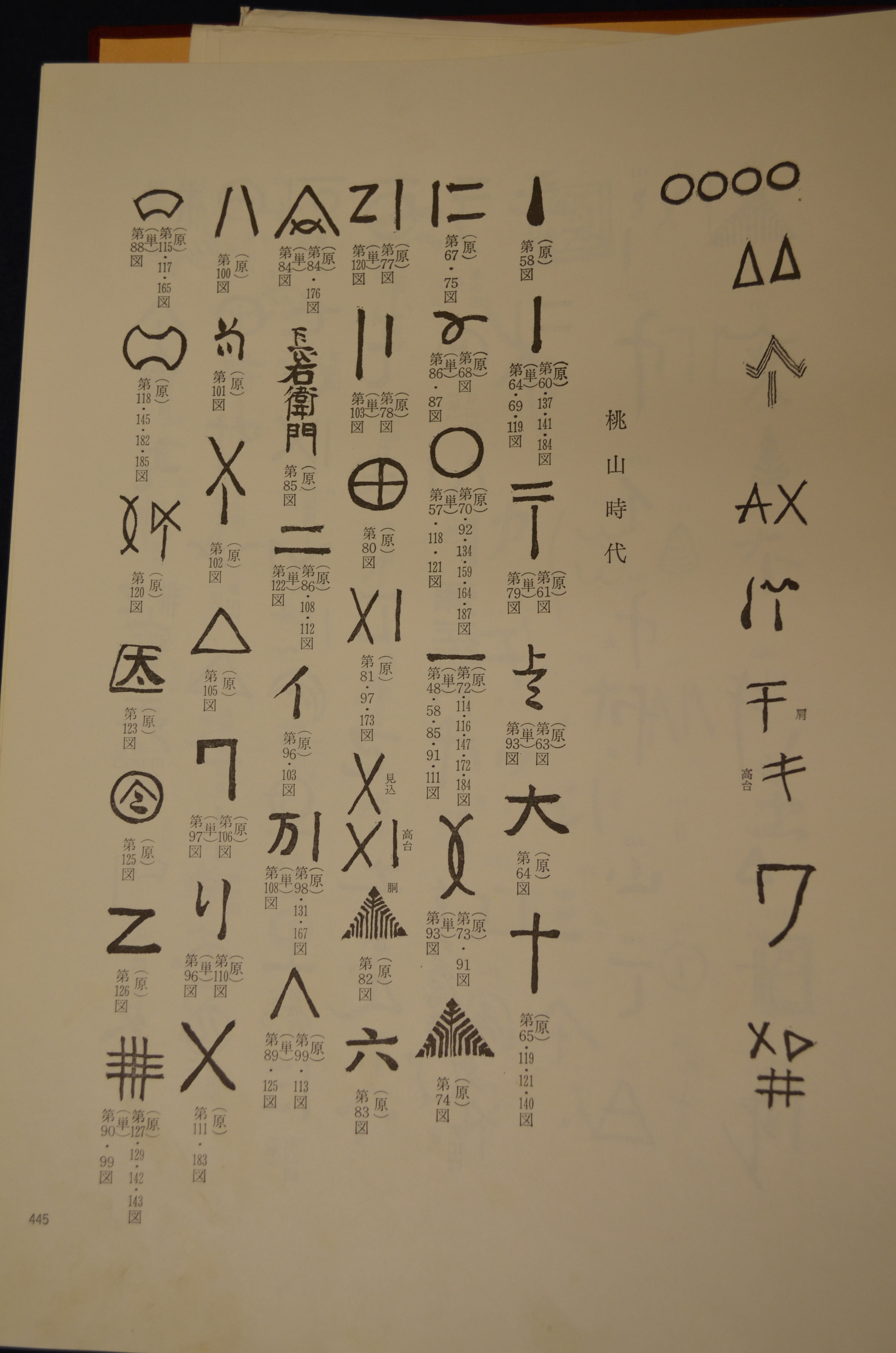
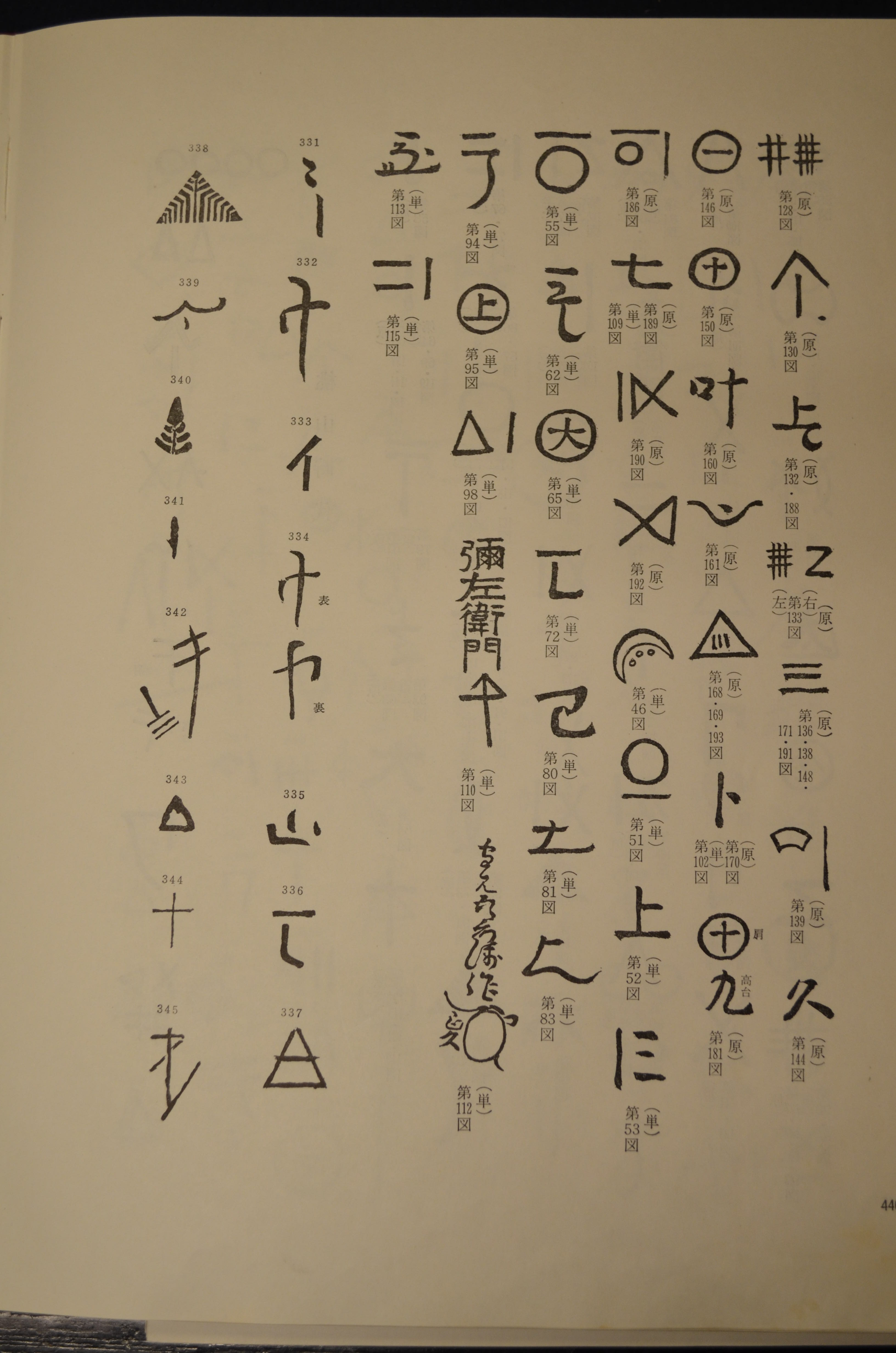
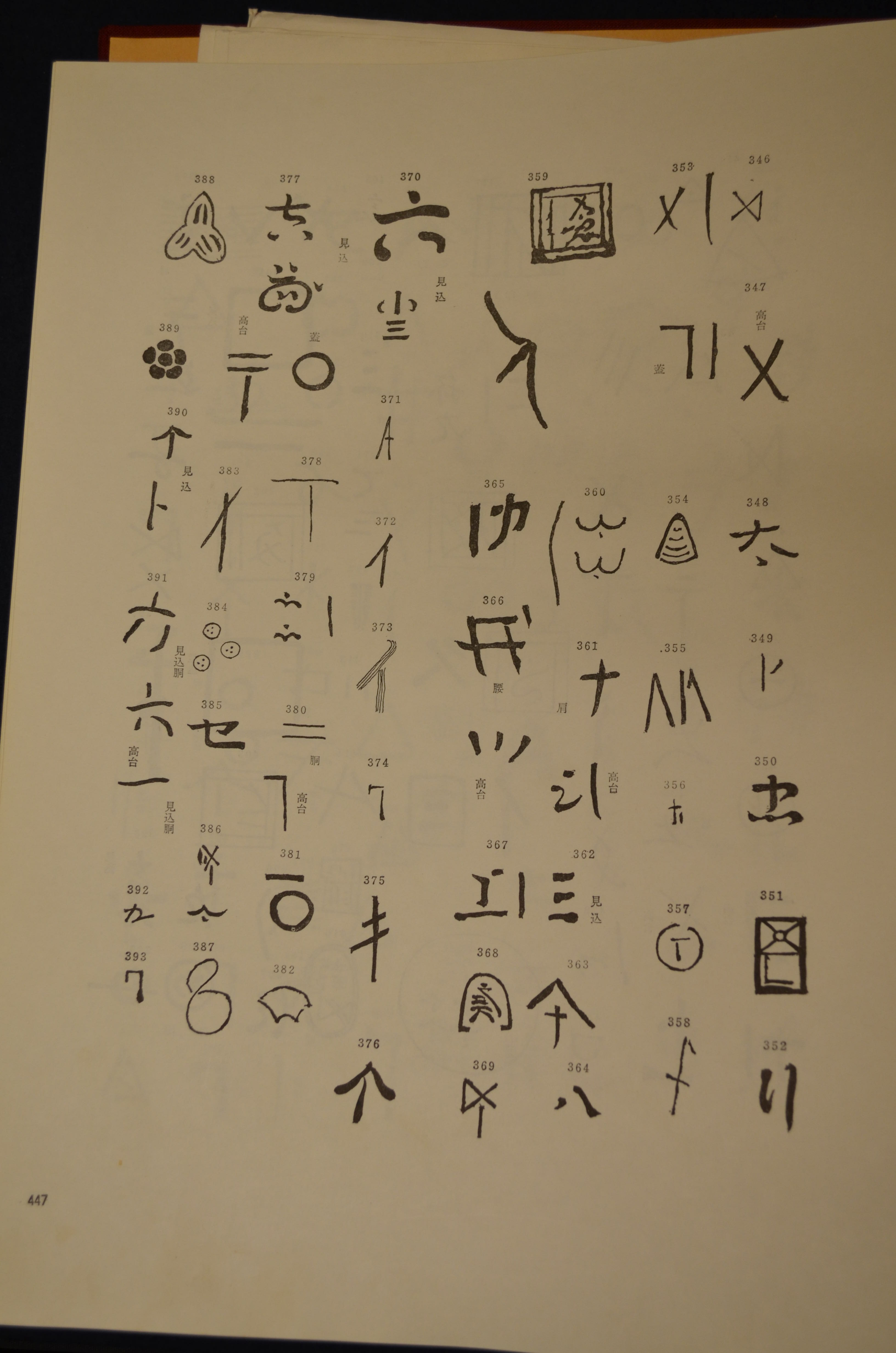
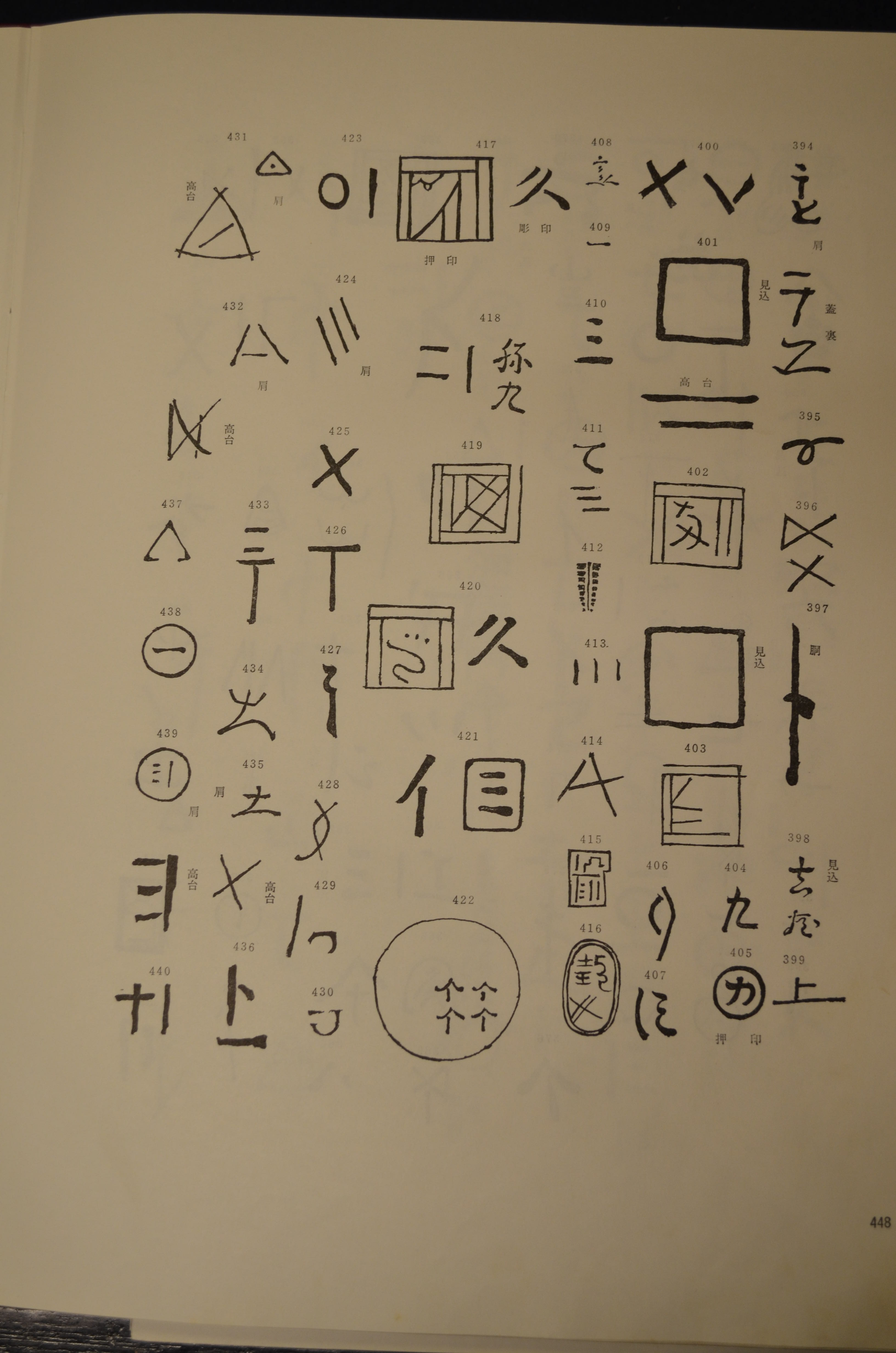
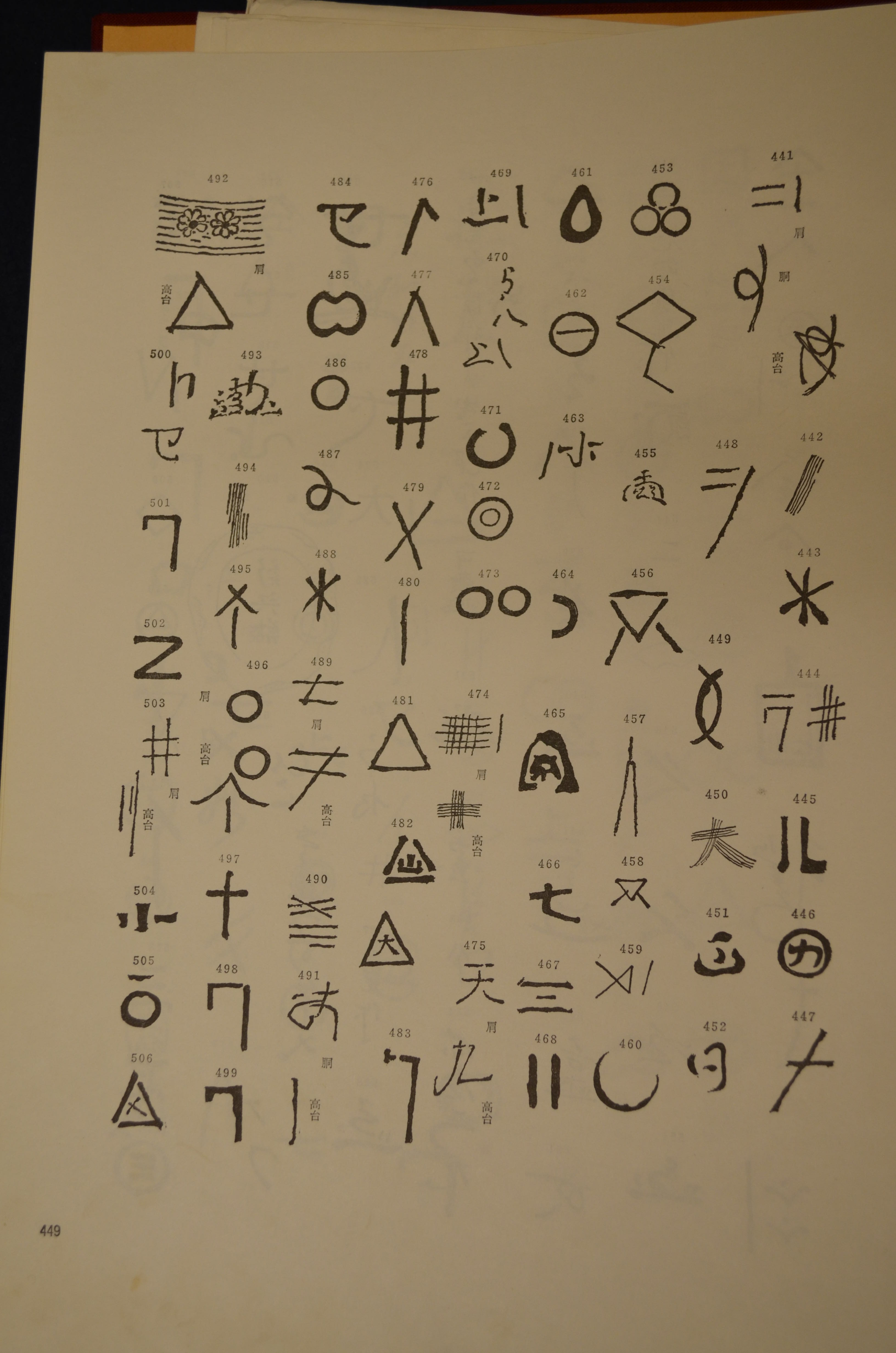
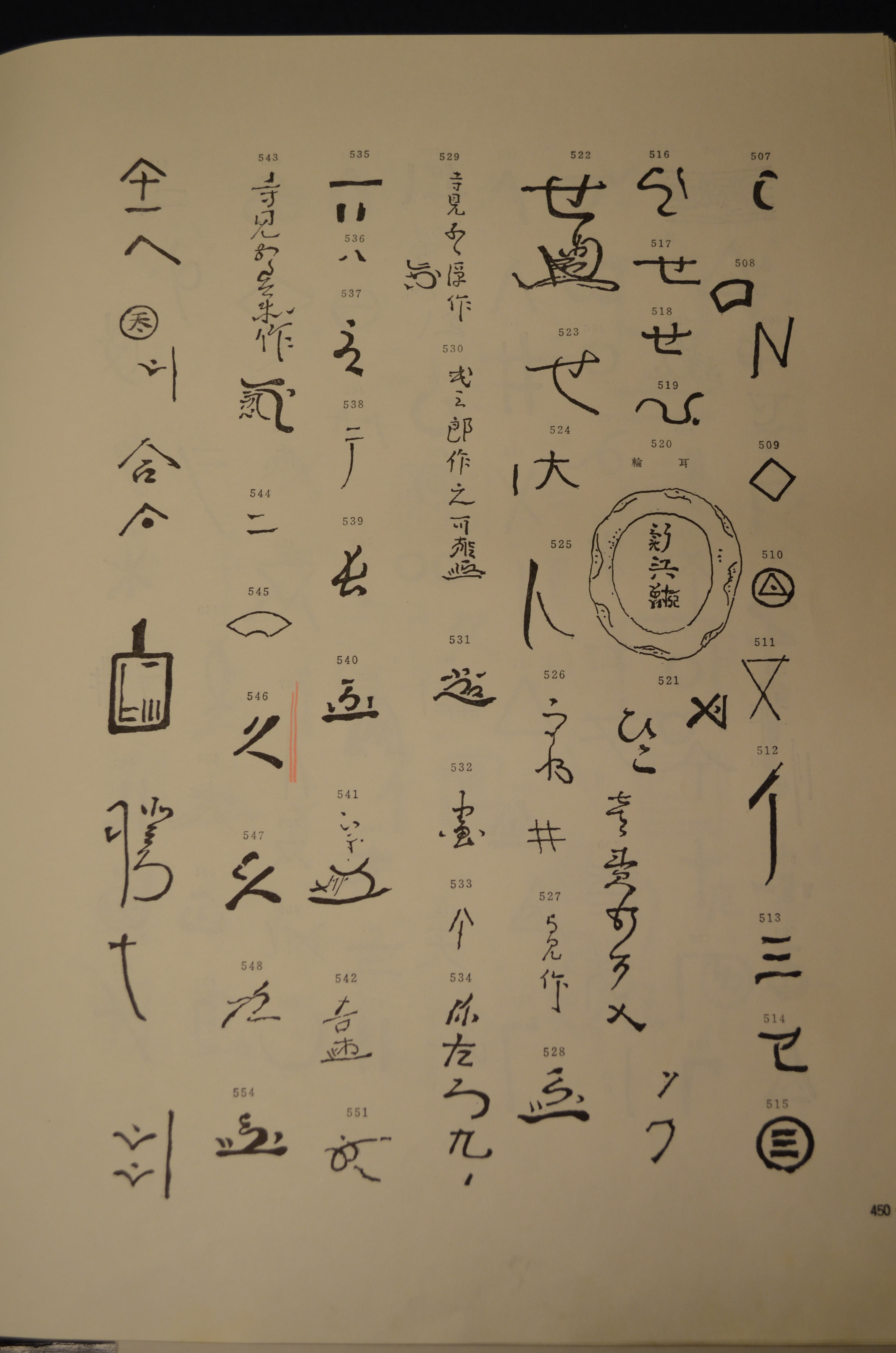
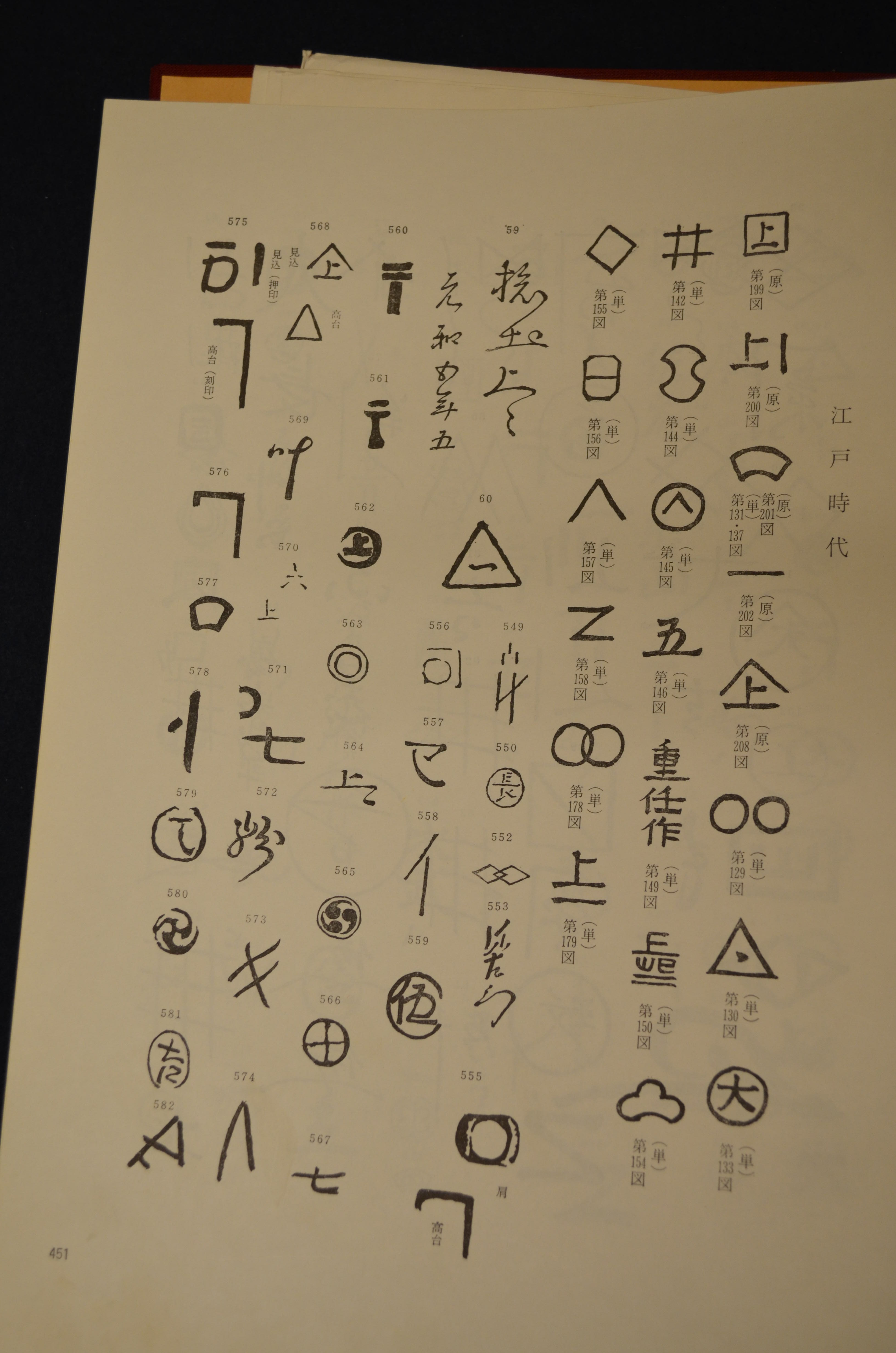
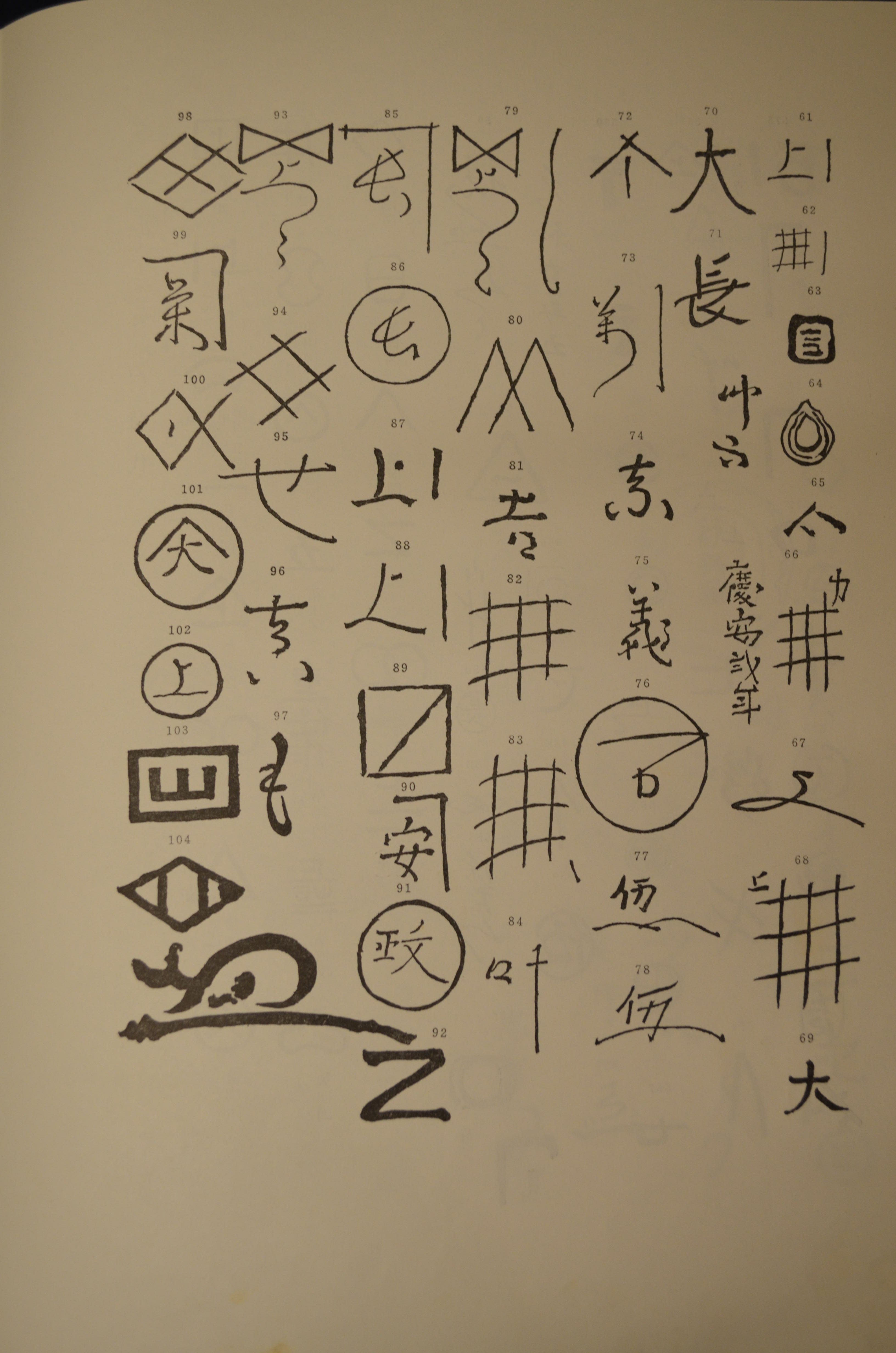
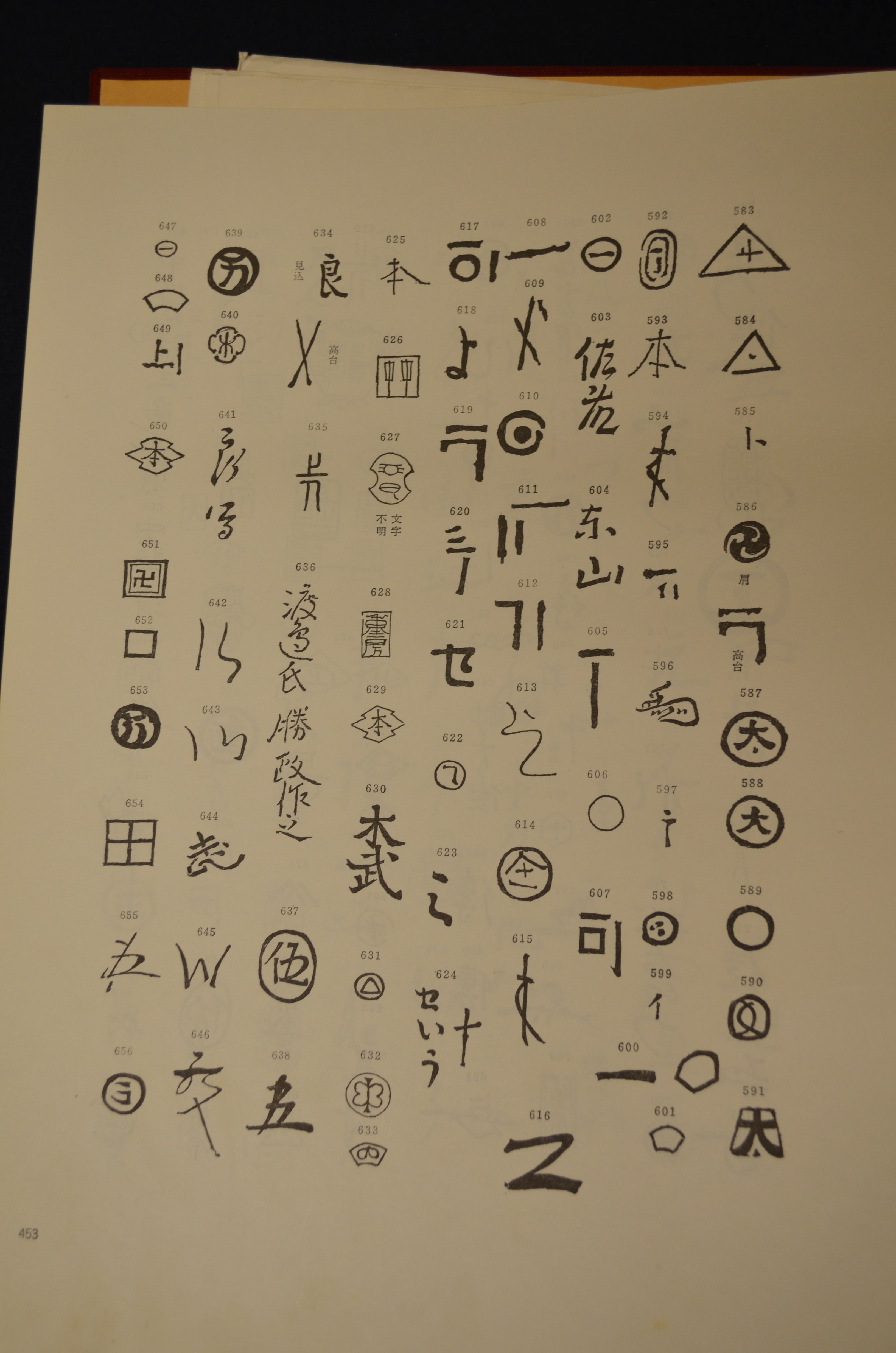
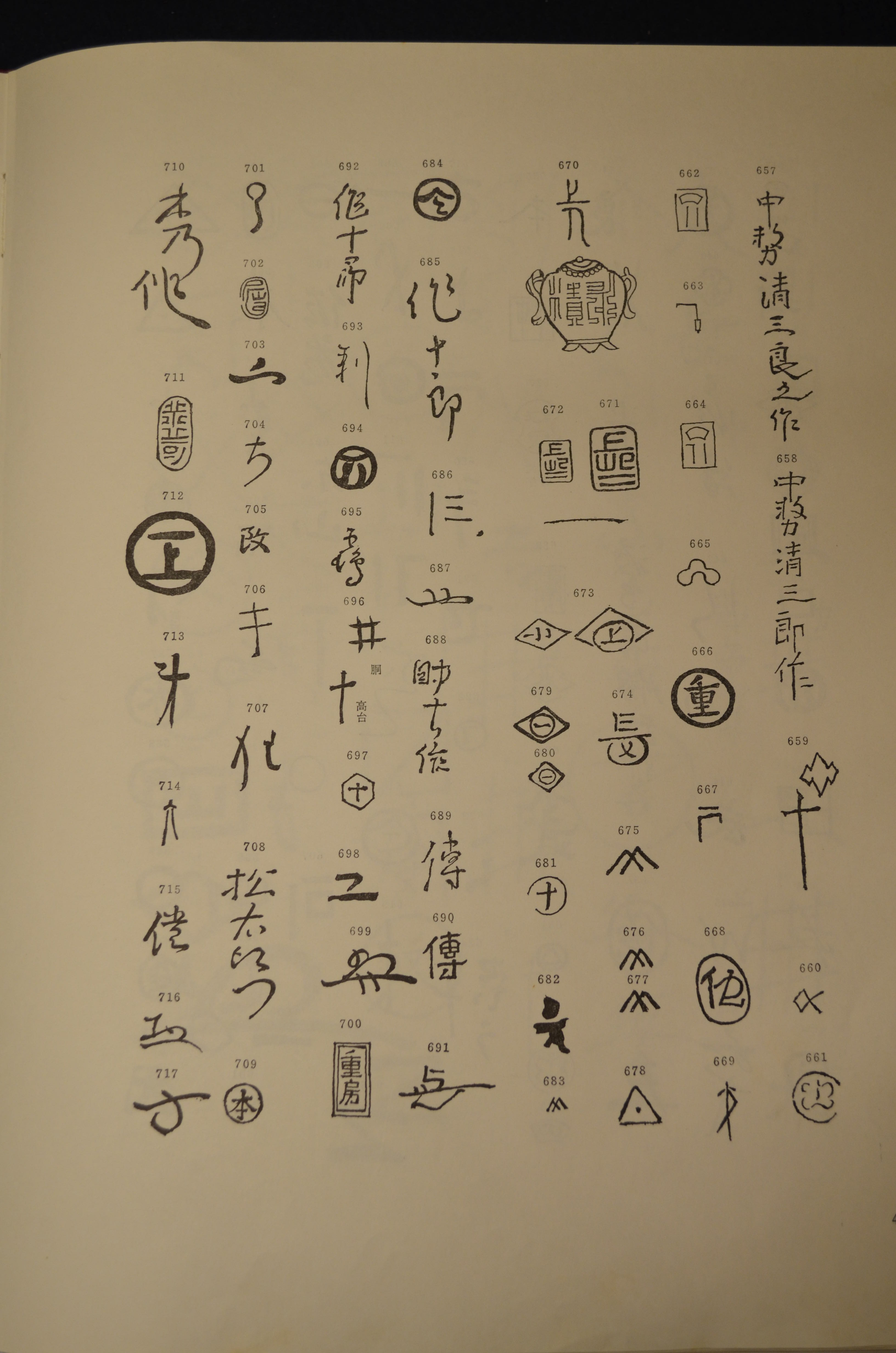
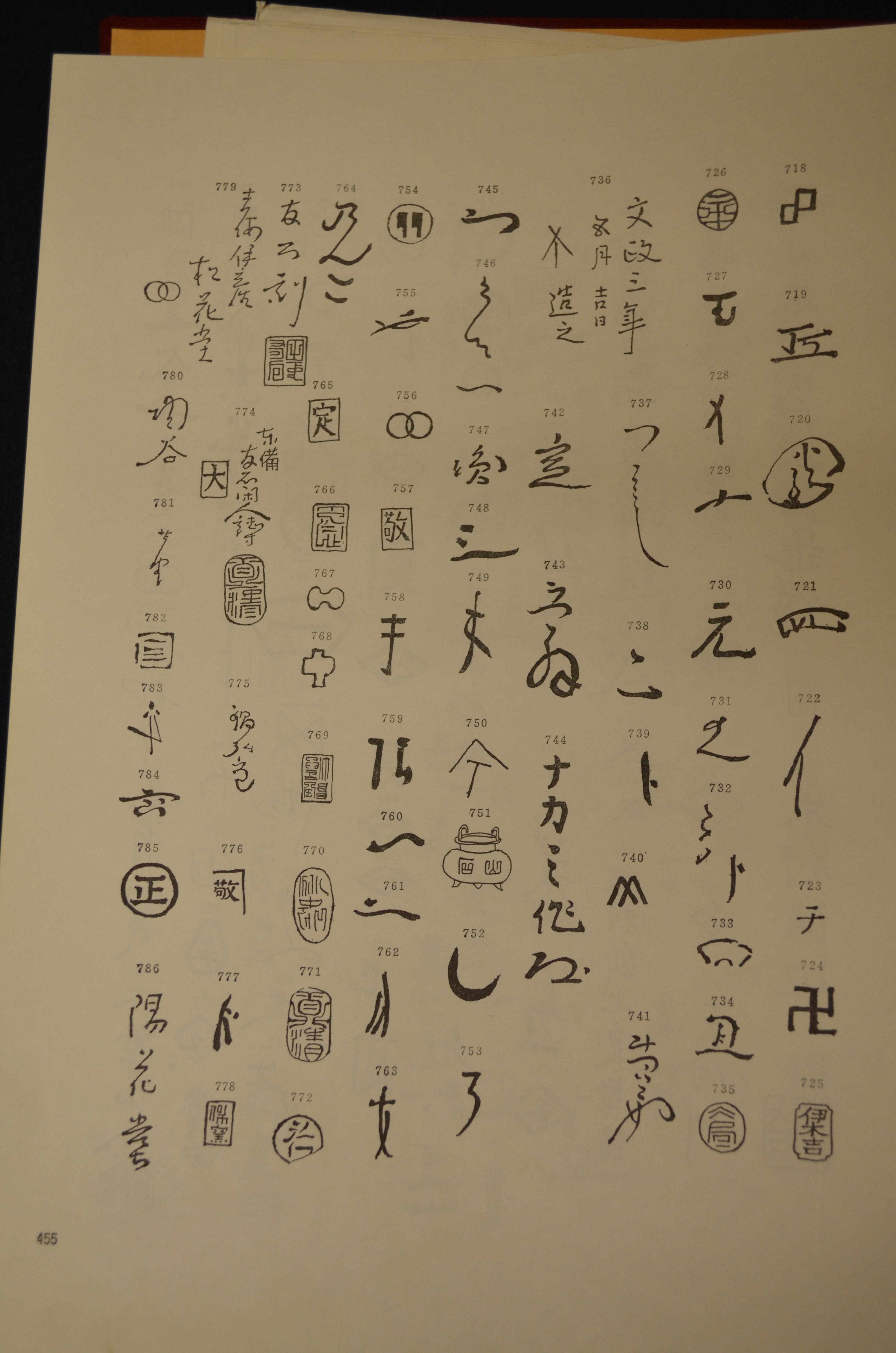
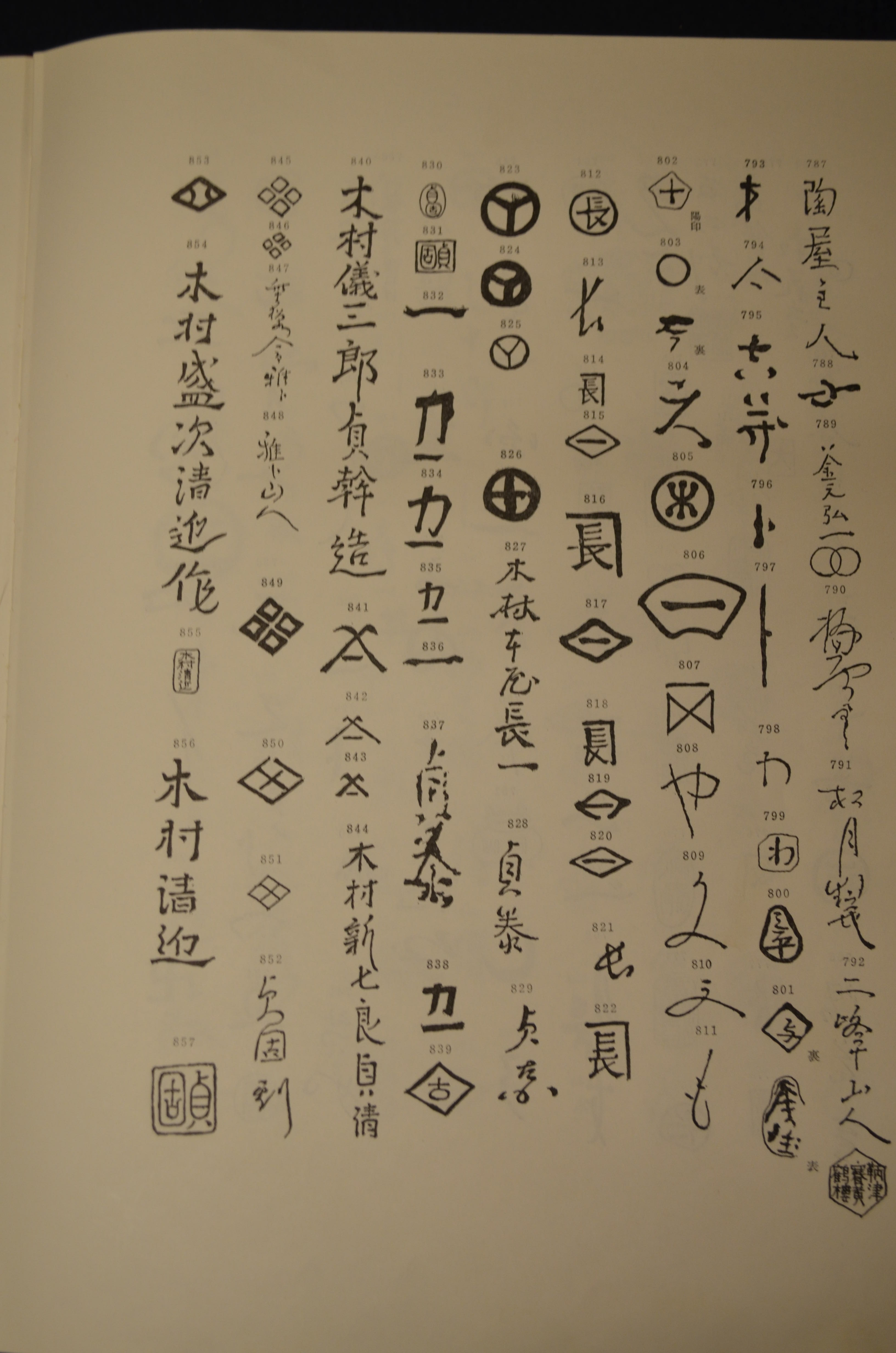
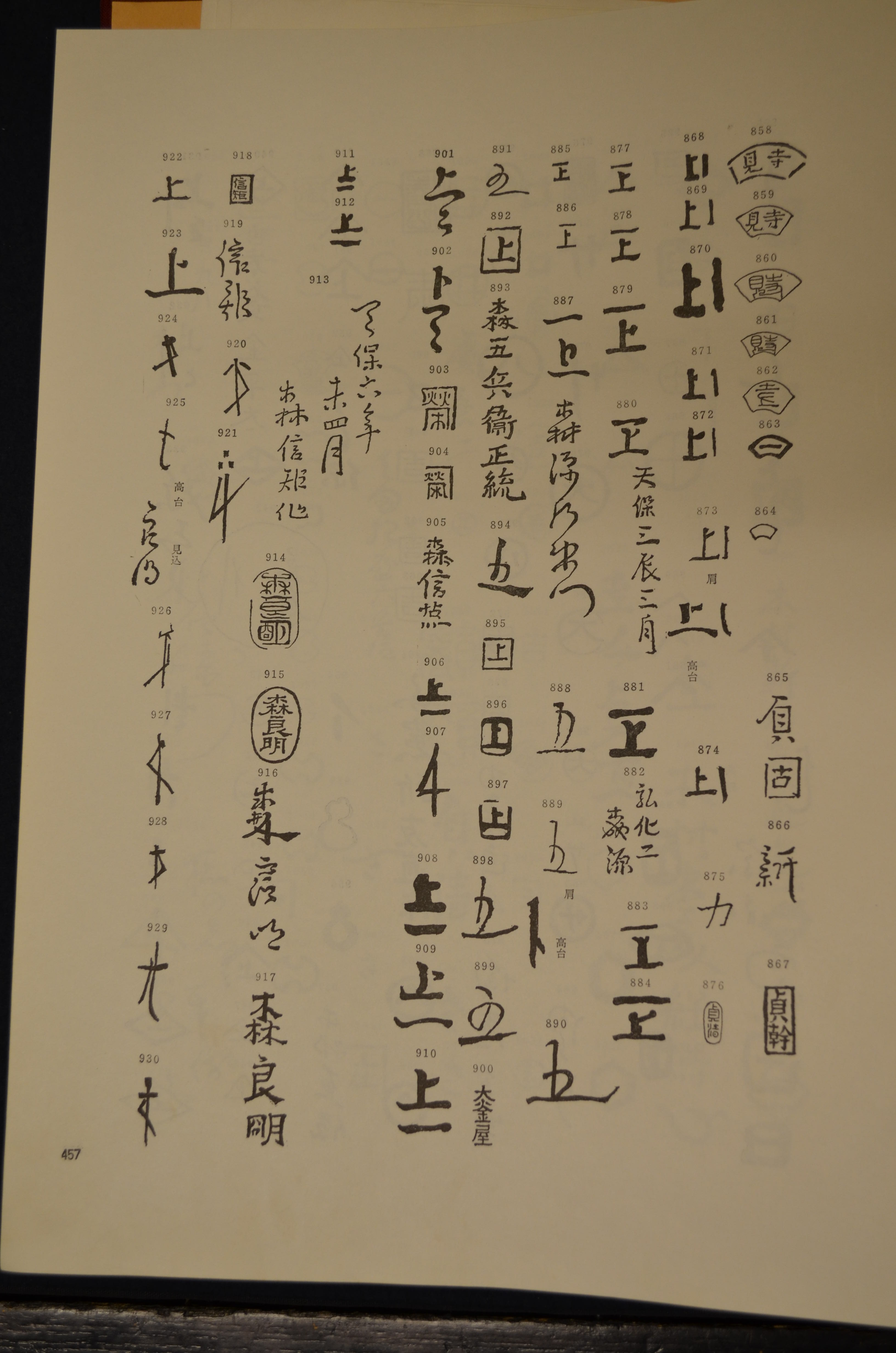
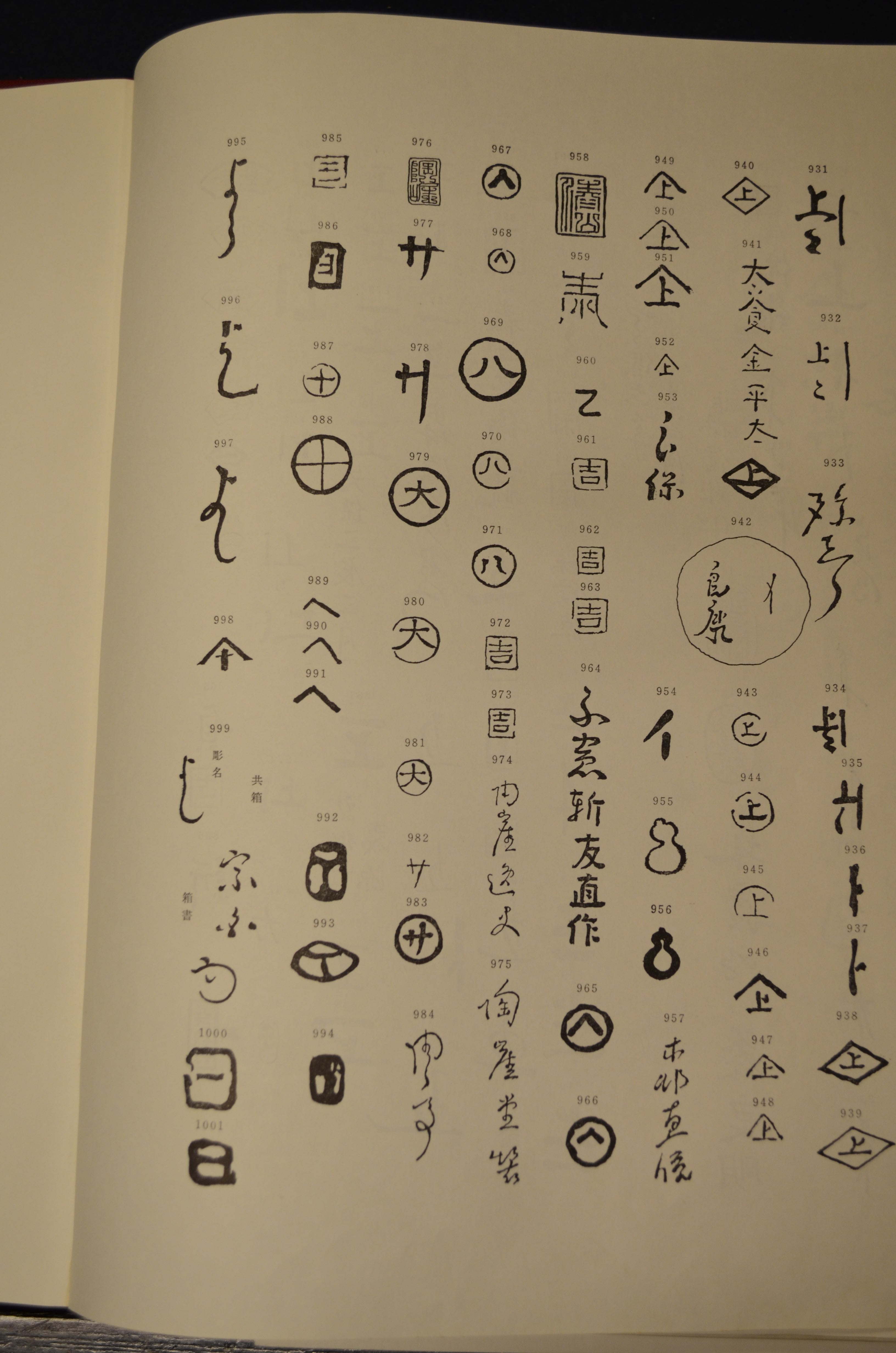
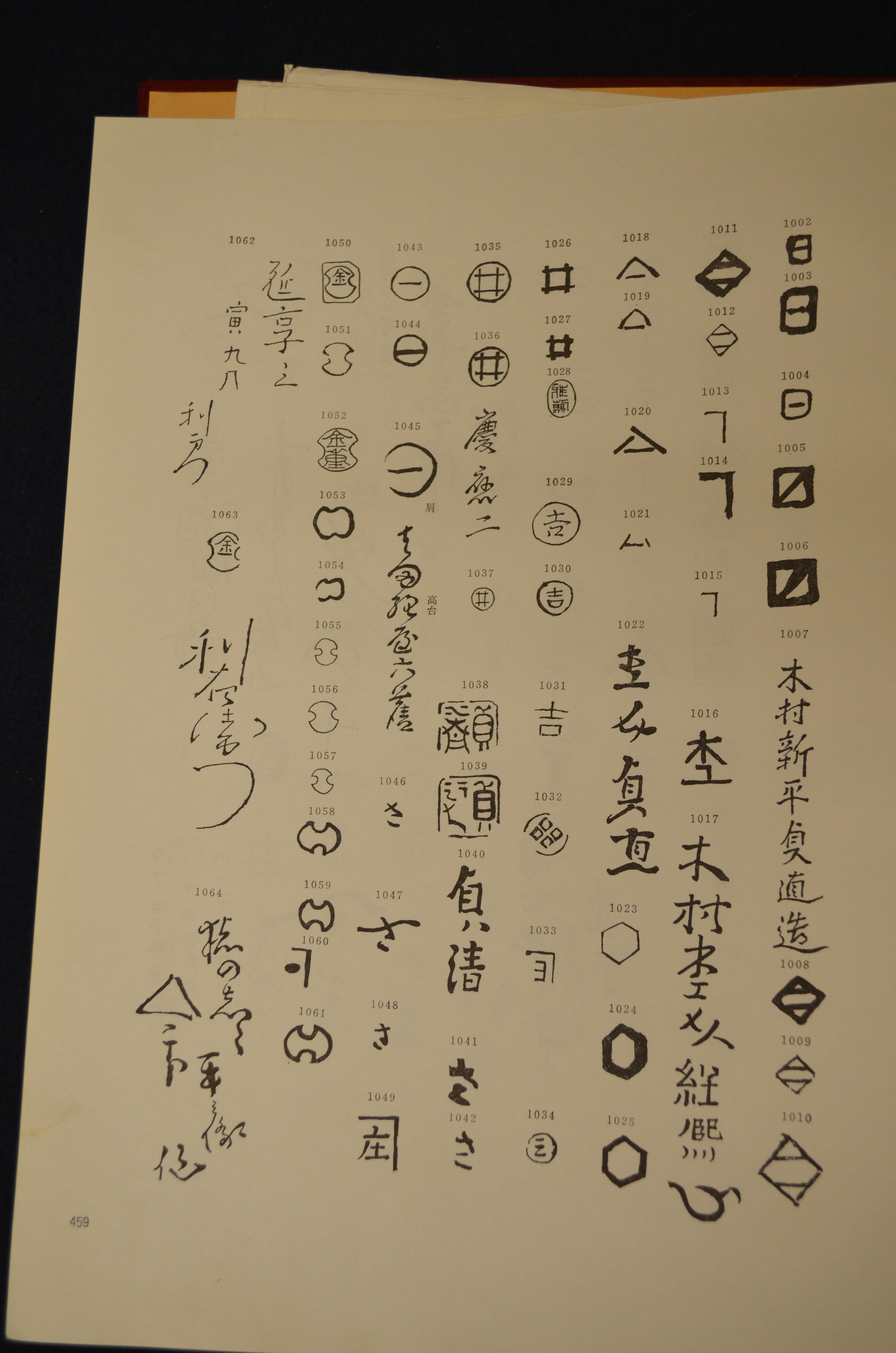
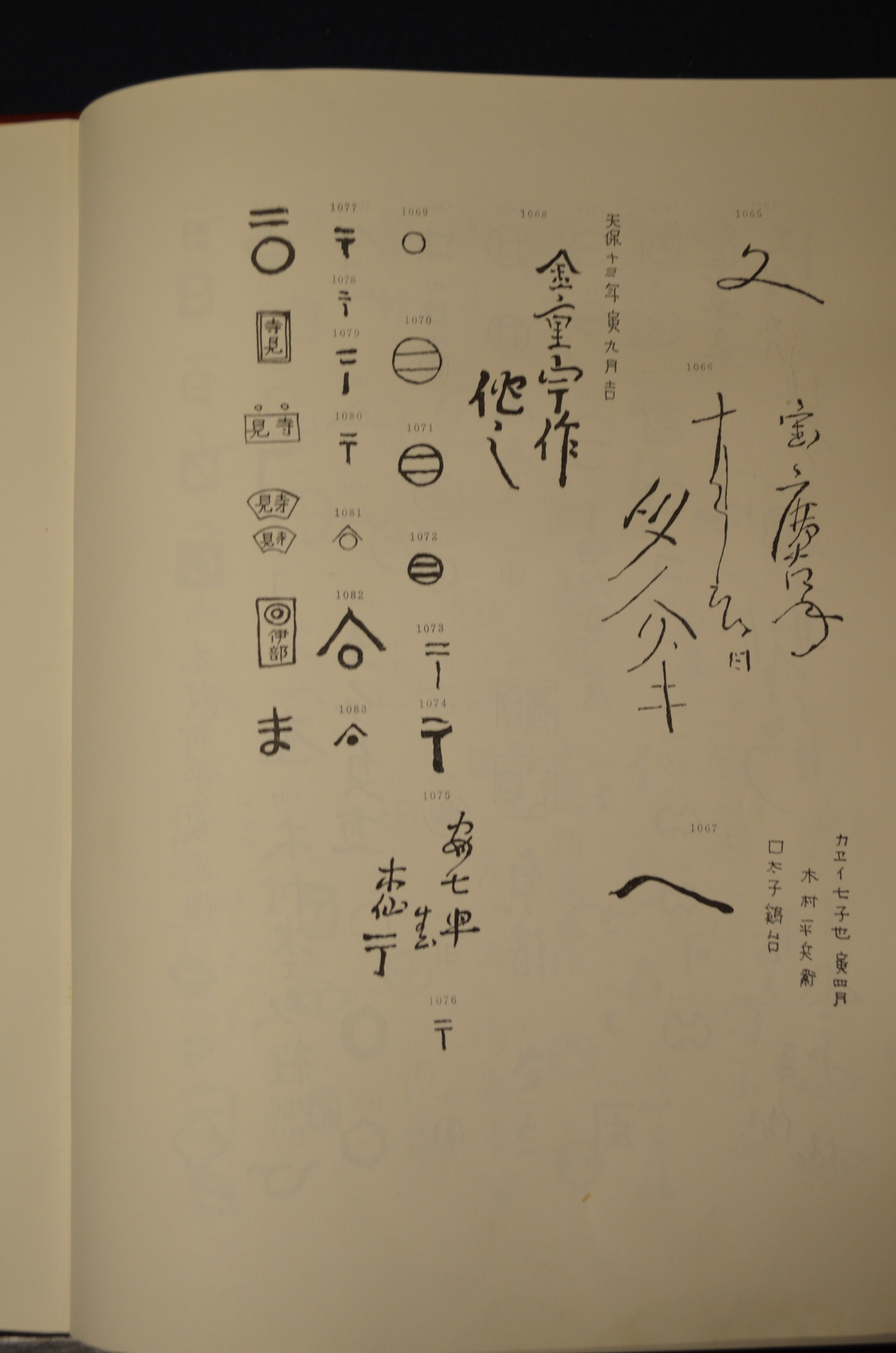
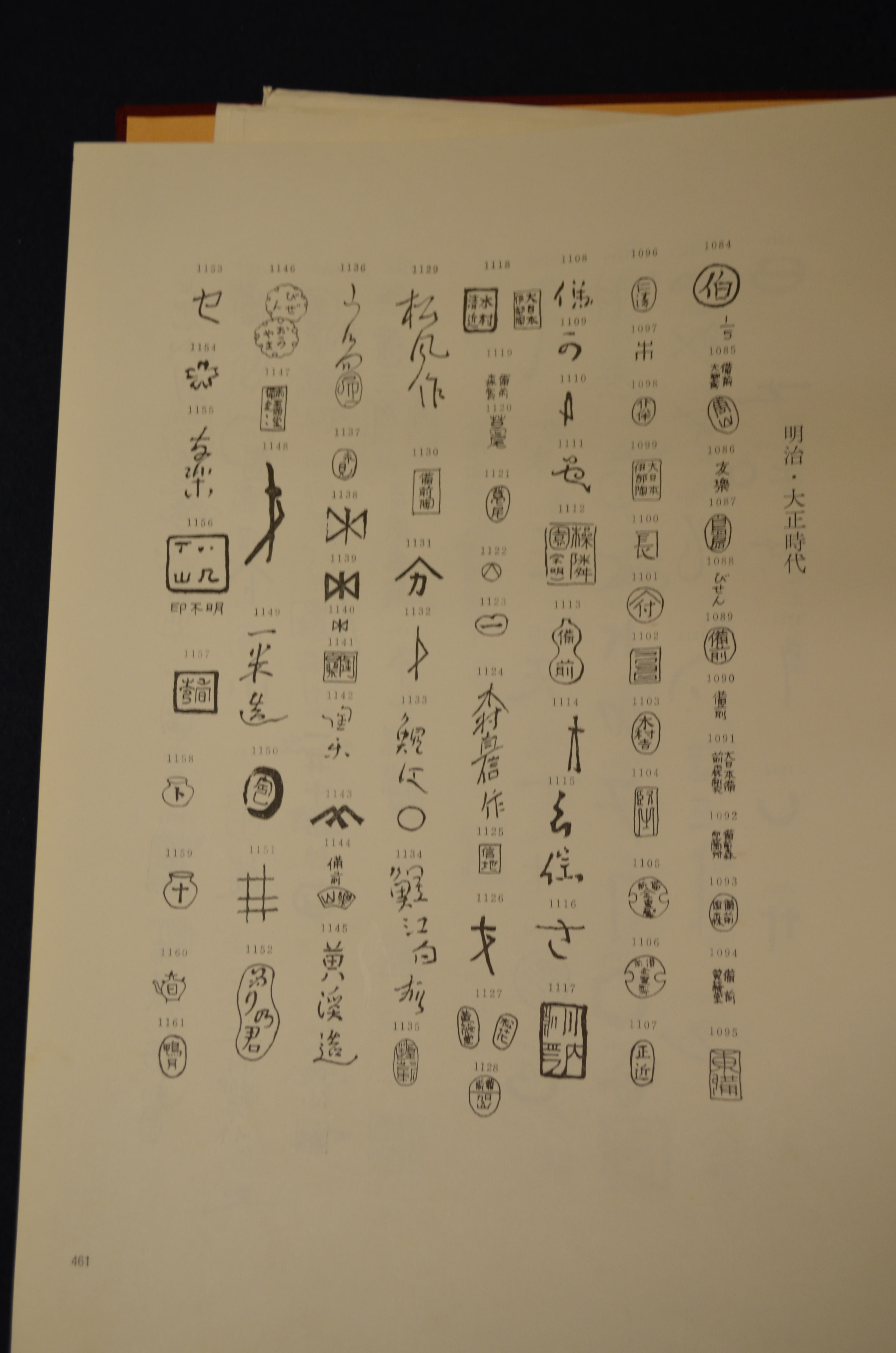
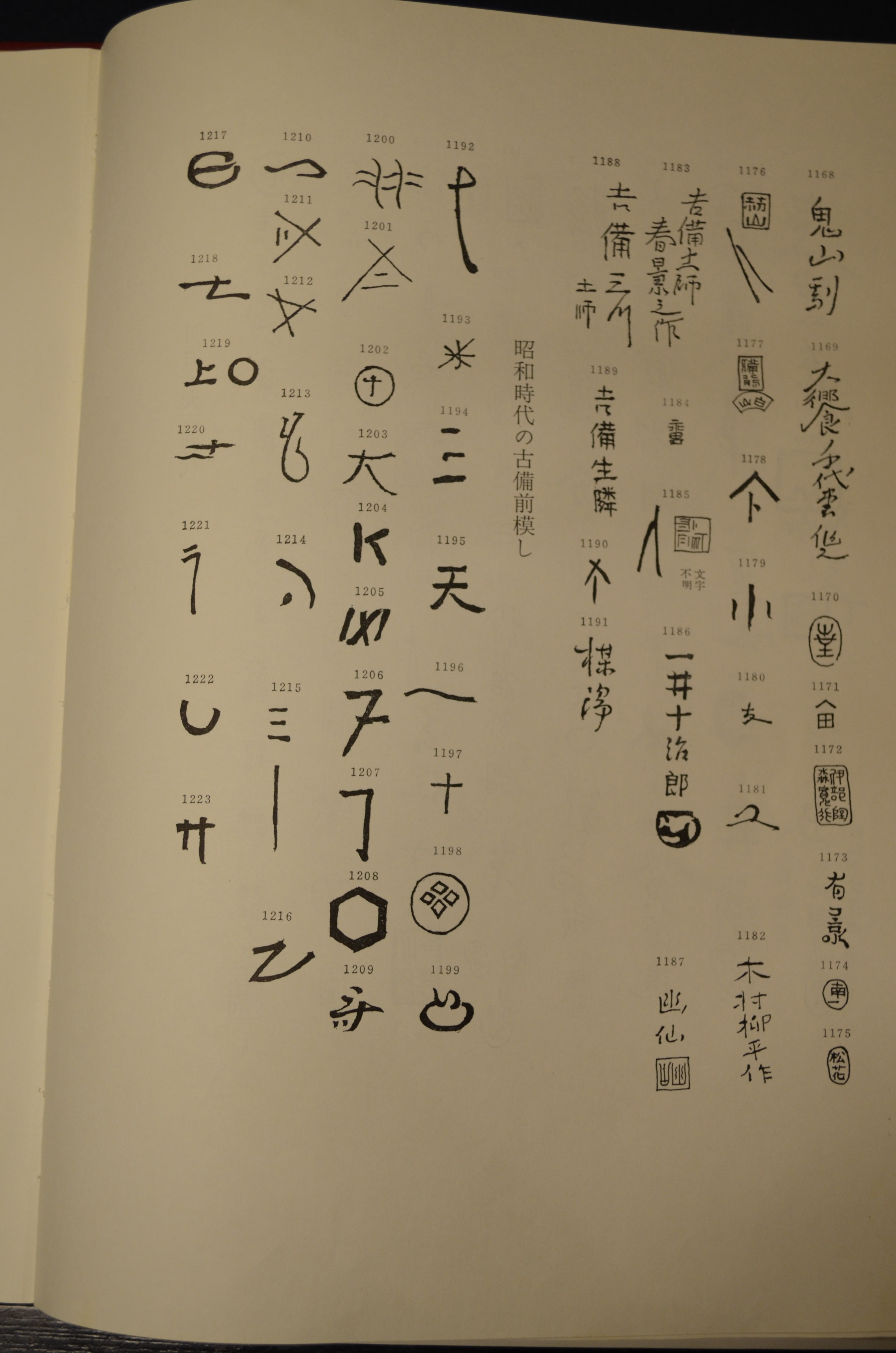
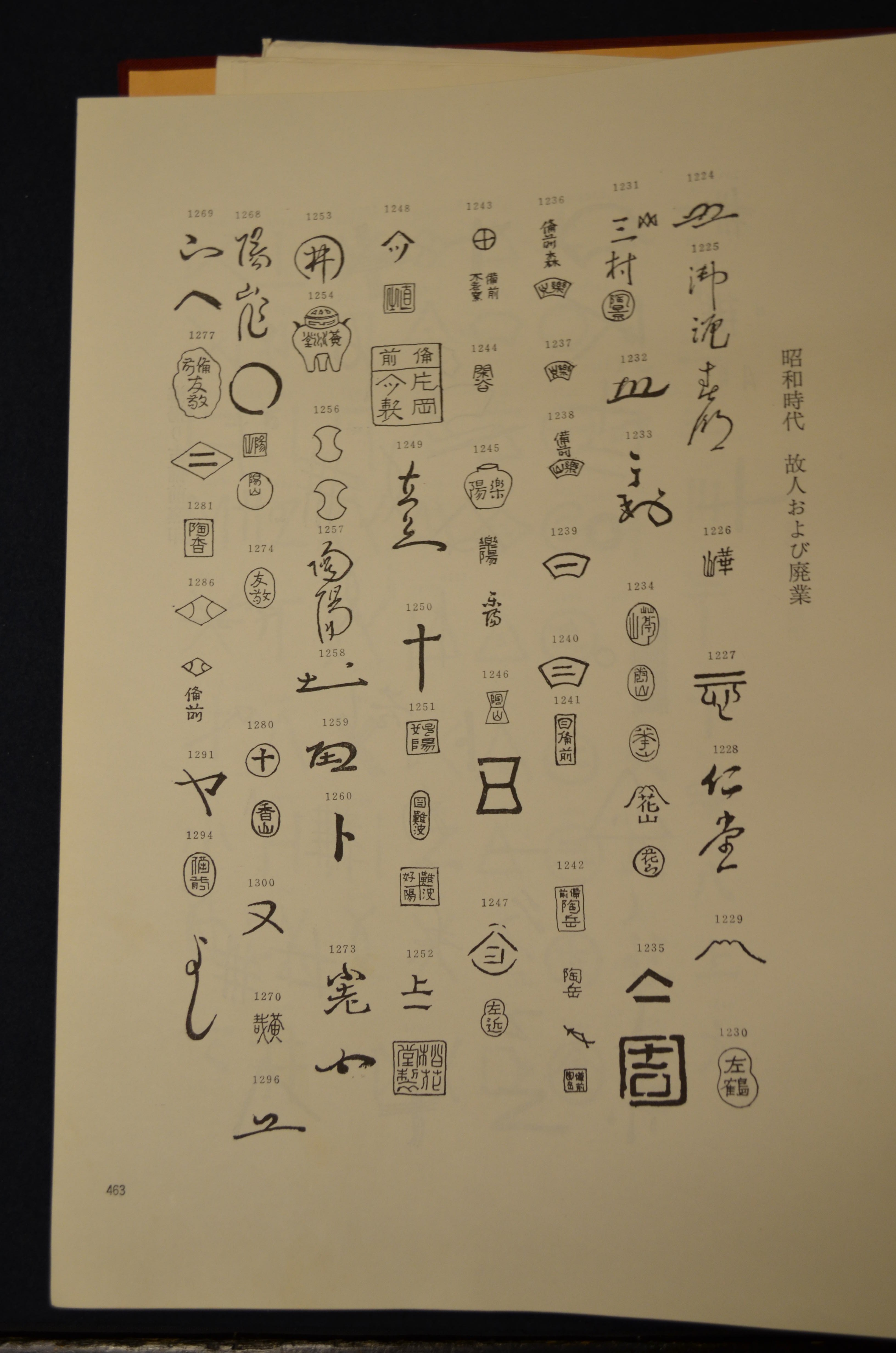
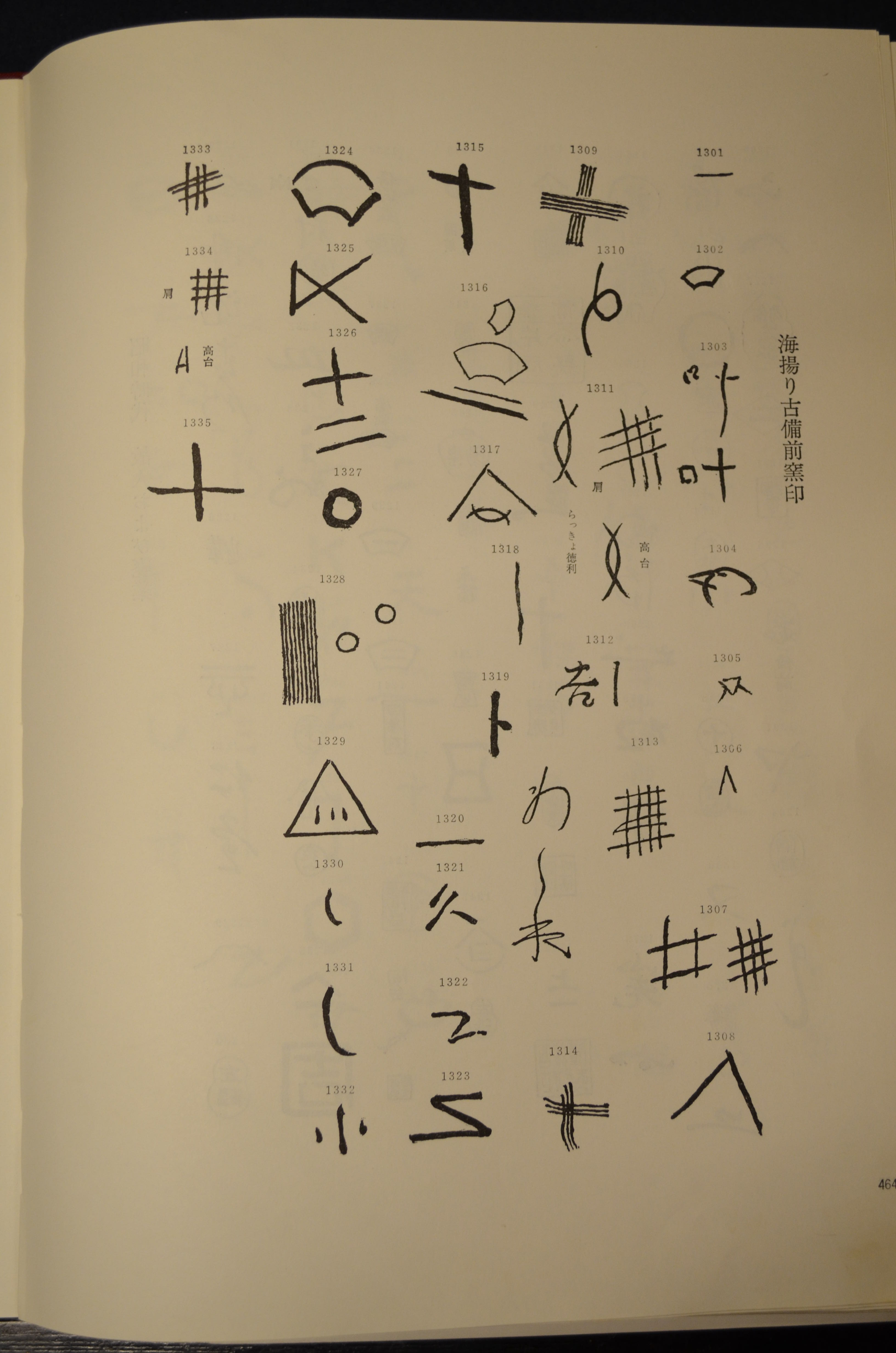
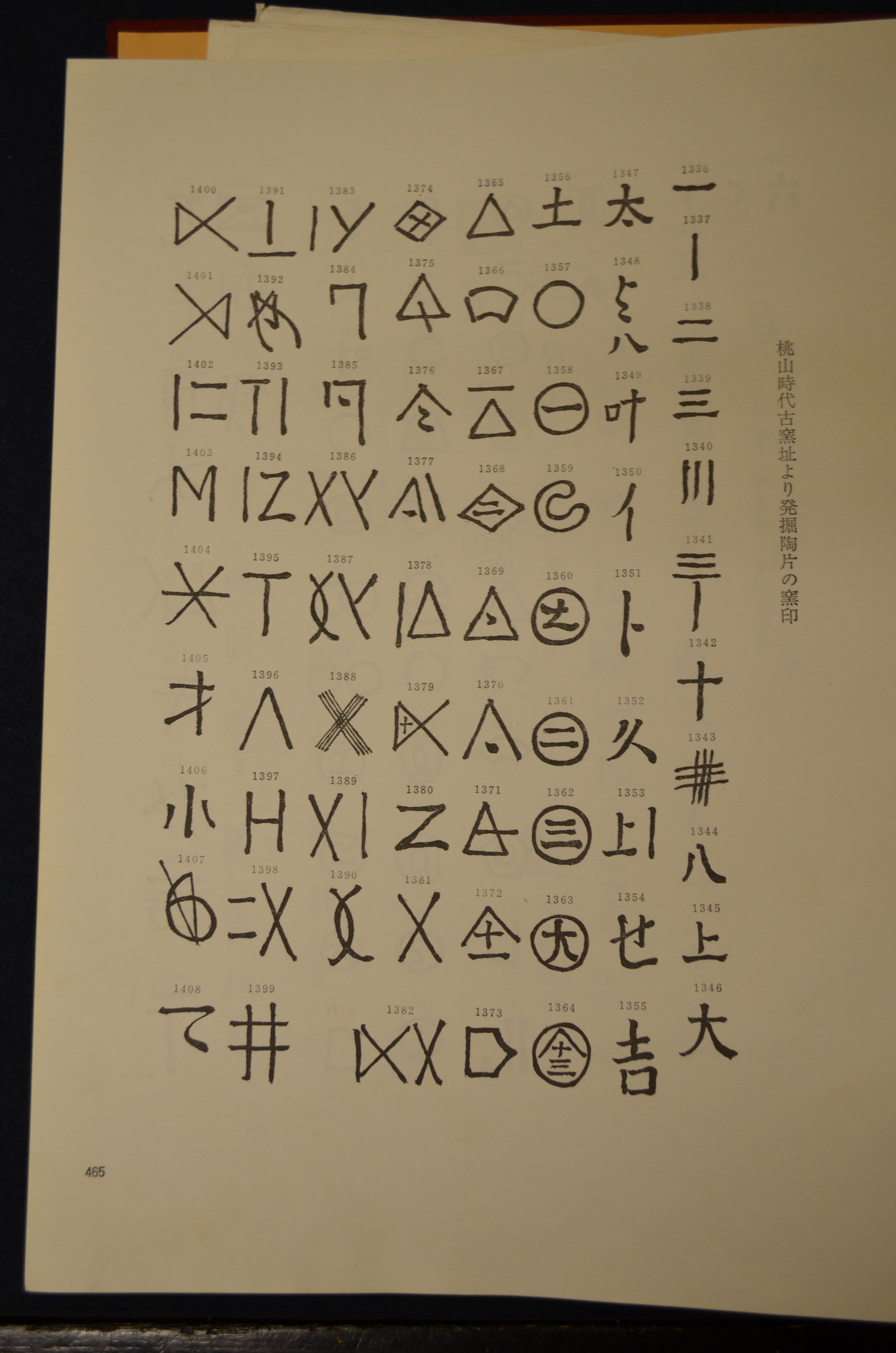
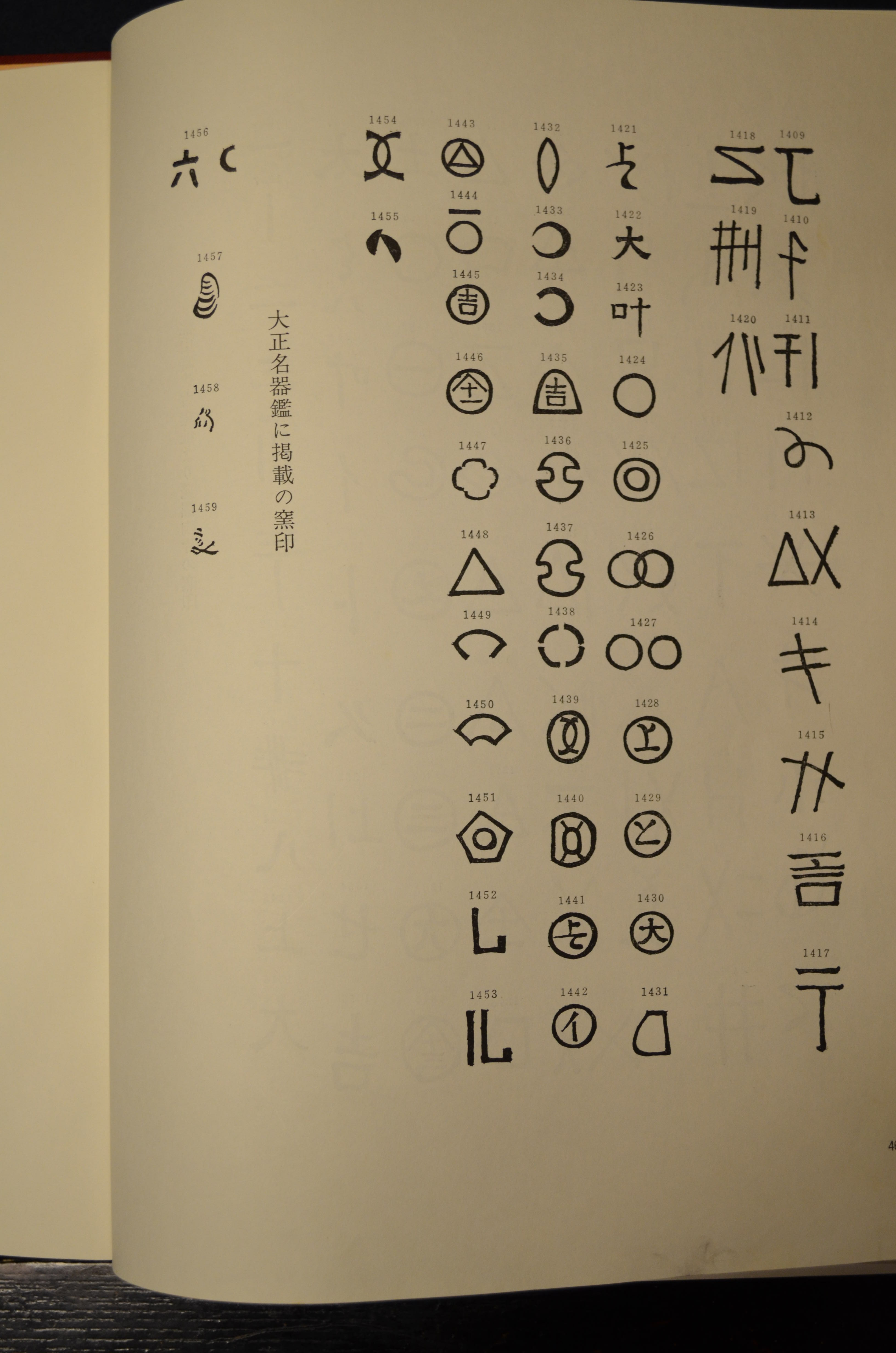
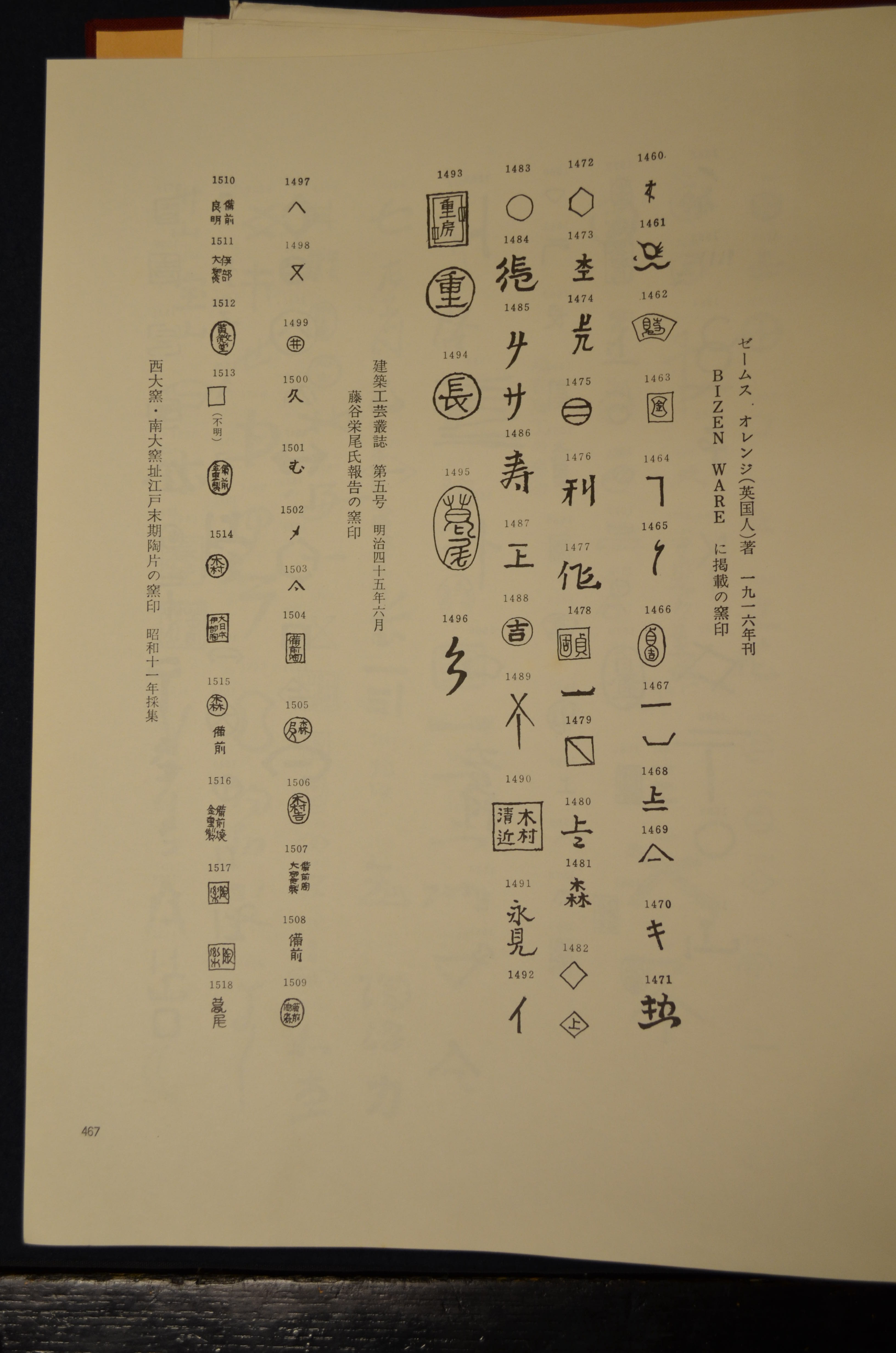
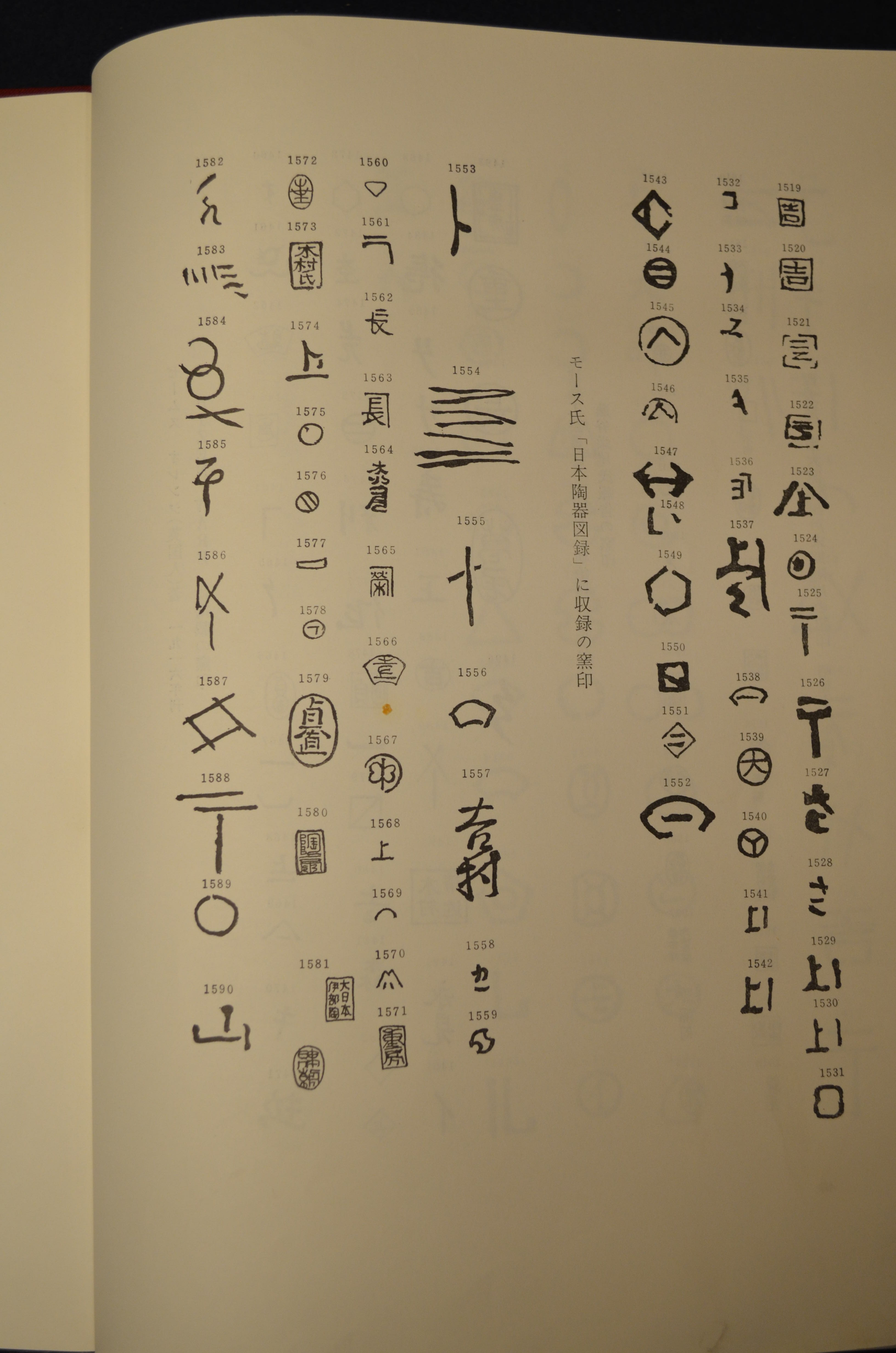
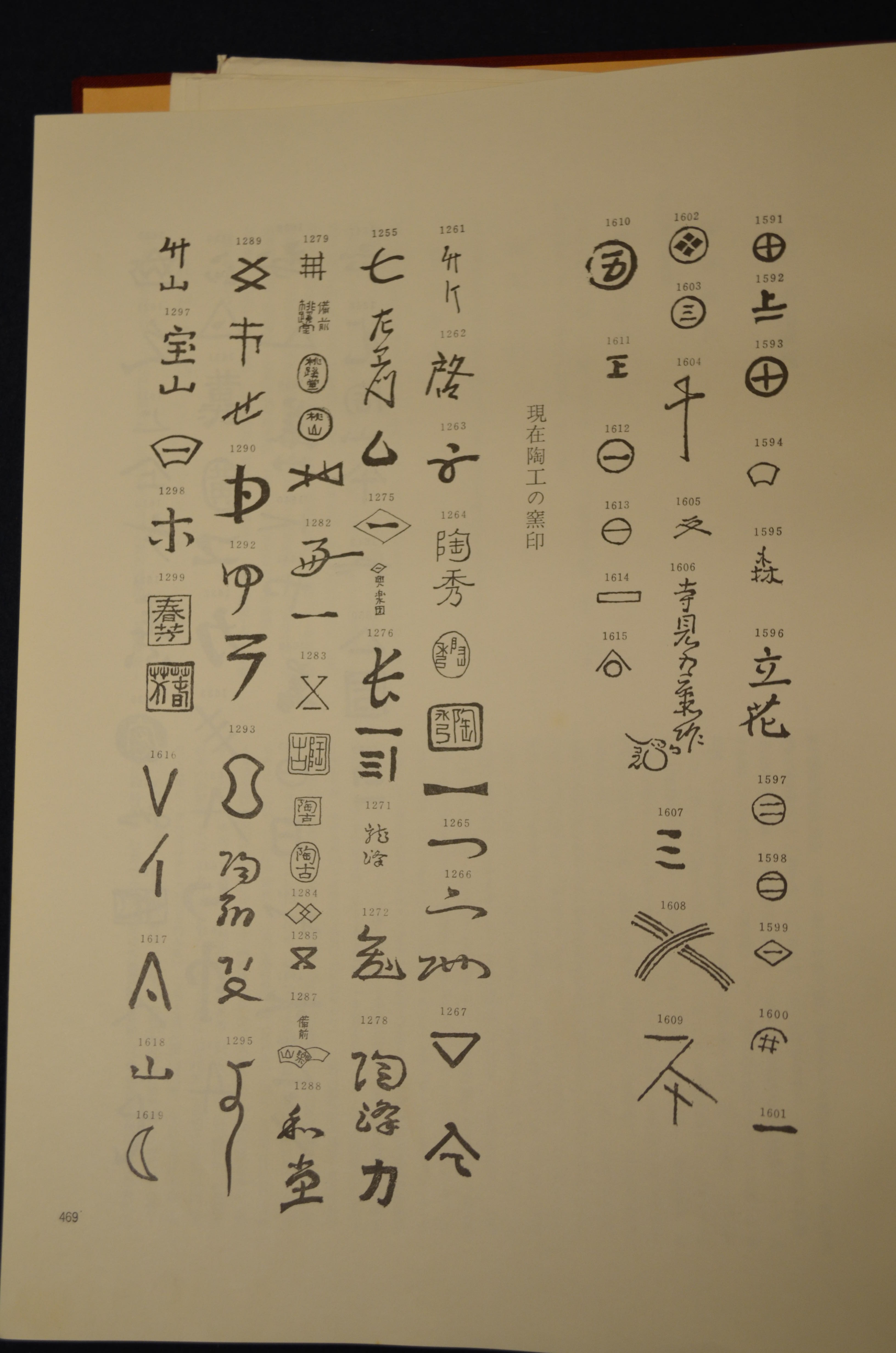
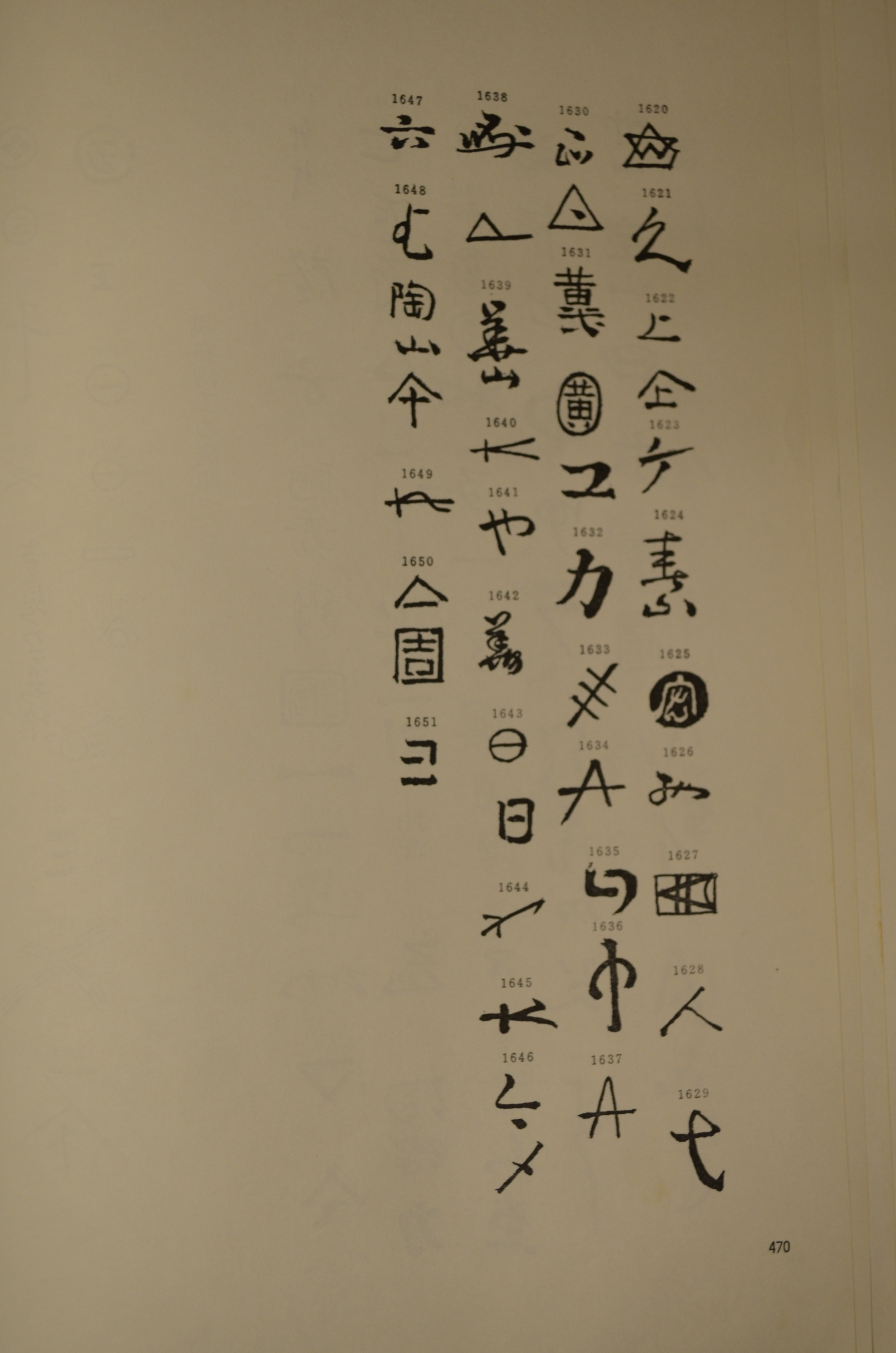
I am going to post images of 30 pages of kamajirushi from a book, Old and New Bizen Pottery Kamajirushi by Katsura Matasaburo, 桂又三郎著.
The guide to the numbers at the bottom of this post is essential to deciphering any of the kamajirushi. Here is an example from the first page of the book.
Here is first kamajirushi in the book, it is the horizontal line below the numbers 99 and 147

Any number 22 and above refer to detailed notes in the book that usually gives more detailed information on a potter who used the kamajirushi. The number 4 refers to *Period and type of pieces* below, 7, 8, 11, 20,. 21C refer to the same below. Note 4 below says if this single line kamajirushi is found on a large pot with a wide mouth it is from the years between 1450 – 1603, note 7 if found on a tea ceremony item it is from the 1573 – 1603 period, and so on for number 8, 11, 20, and 21C.
The numbers 99 refers to a note which says, putting it through translate so the name pronunciation may be off,
Shinshichirō Sadayasu (Kimura, 木村), 沈新七郎貞泰(木村) . Son of Naozaemon Sadakata, 直左衛門貞固; previously known as Shichirōbei. A master craftsman of intricate objects and tea utensils, he served as an official artisan for the Ikeda Domain. On his finest works, he inscribed the signature “Sadayasu” or “Shinshichirō Sadayasu.”
Born in the third year of the Kansei era (1791); died on the fifth day of the ninth month in the fourth year of the Ansei era (1857). He was 67 years old at the time of his death.
If you search his name, 沈新七郎貞泰, you come up with this link, https://kottou.p-kit.com/page513909.html The bottom of the page at the link shows a couple of kamajirushi including the single line shown in the image.
The number 147 is a note, the following is through G translate so the name pronunciation may be off,
Naosaemon Teiko, 直左衛門貞固, (Kimura, 木村), born in the third year of Meiwa, 1766, was the second son of Chojuro Nagayoshi and later established a branch family and became a potter. His former name was Shinshichi. (He changed his name between the 12th year of Bunka and the 2nd year of Bunsei.) In October of the 8th year of Kansei, his father Nagayoshi died, and his older brother Chojuro Takao succeeded him as a master craftsman, and at that time Shinshichi became a craftsman’s apprentice. He was later promoted to master craftsman. (Various records) He was a master craftsman of intricate crafts, and many of his works are still in existence today. He died on November 5th, the 11th year of Bunsei, at the age of 63.
Searching his name gives you this link, https://kottou.p-kit.com/page354530.html which gives a different birthdate, this site gives 1757, but the same year he died, 1828.
Here are a few more that are from the same page and only have 1 stroke count.

The only number which can’t be referenced below, that is, number above 22, which would refer to a note is #24, here is that note, same thing about G translate, the name pronunciation may be off.
#24
Yōzan Isezaki, 伊勢崎陽山, (given name: Yoshio, 義男) was born in Imbe in 1902 (Meiji 35). At the age of 18, he began studying ceramic techniques under Kan’ichi Kimura, 木村貫一, and Yūsen Tajima, 田島幽仙. In 1933 (Shōwa 8), he built his own kiln and established himself as an independent potter. He excelled in the creation of crafted objects (*saikumono*) and brought a distinctive, personal quality to his firing techniques. In his later years, he focused primarily on the production of tea ceremony utensils. In 1929 (Shōwa 4), he received an award at an arts and crafts exhibition sponsored by the Ministry of Commerce and Industry. He passed away on February 16, 1961 (Shōwa 36).
Here are the references for numbers from 1-22C
Period and type of pieces Dates pieces made
1 Kamakura period ceramic pieces
鎌倉時代作品 1185 – 1333
2 Beginning and middle Muromachi period ceramic pieces
室町初·中期作品 1338 – 1449
End of Muromachi and Azuchi-Momoyama period, these marks are from this period if found on large jars
3 三室町末·桃山時代大瓶 1450 – 1603
End of Muromachi to Azuchi-Momoyama period, these marks are from this period if found on large pots with wide mouths
4 四 室町末·桃山時代壺、水瓶 1450 – 1603
End of Muromachi to Azuchi-Momoyama period, these marks are from this period if found on pots with constricted necks usually used for pouring sake or other drinks
5 五 室町末·桃山時代徳利 1450 – 1603
End of Muromachi period, if found on ware used for the tea ceremony
6 六 室町末期茶器 1450 – 1573
Azuchi-Momoyama period, if found on ware used for the tea ceremony
7 七 桃山時代茶器 1573 – 1603
Beginning of Edo period, if found on ware used for the tea ceremony
8 八 江戸初期茶器 1603 – 1695 +-
Middle of Edo period, if found on ware used for the tea ceremony
9 九 江戸中期茶器 1690 – 1780 +-
End of Edo period. The pieces are usually smaller, not large jars, and fired in multi-chambered climbing kilns. See note below on #20
10 10 江戸末·天保窯茶器 1780 – 1868 +-
Azuchi-Momoyama period pieces which have been recovered from ship wrecks.
11 一一 海揚リ備前(桃山時代) 1573 – 1603
Azuchi-Momoyama to beginning of Edo period found on intricate, detailed ceramic pieces such as figures including deities, incense holders, not on everyday functional items
12 三 桃山·江戸初期細工物 1573 -1695 +-
Middle Edo period found on intricate, detailed ceramic pieces such as figures including deities, incense holders, not on everyday functional items
13 三三 江戸中期細工物 1690 – 1780 +-
End of Edo period. The pieces are usually smaller, not large jars, and fired in multi-chambered kilns
14 一四 江戸末·天保窯細工物 1780 – 1868 +-
Beginning Edo period, these marks are from this period if found on large jars
15 一五 江戸初期大瓶 1603 – 1695 +-
Middle to end of Edo period, found on large jars and pots
16 一六 江戸中·末期トーゴ(大瓶) 1690 – 1868 +-
Beginning Edo period, these marks are from this period, found on a wide variety of functional, everyday pieces
17 一七 江戸初期雑器 1603 – 1695 +-
Middle Edo period, these marks are from this period, found on a wide variety of functional, everyday pieces
18 一八 江戸中期雑器 1690 – 1780 +-
End of the Edo period, these marks are from this period, found on a wide variety of functional, everyday pieces
19 一九 江戸 末期雑器
Pieces fired in multi-chambered kilns. There is a surviving ‘Tempo kiln’ in Ibe, Okayama from 1832 but I think this book is using the term to refer to climbing kilns in general, called noborigama to distinguish them from the massive, large kilns used up until the early part of the 1800s.
20 20 天保窯作品 after 1832
Meiji period pieces
21A 三 明治時代作品 1868 – 1912
Taisho and Showa period pieces 1912 – 1989
21B B三 大正·昭和時代作品
Showa era reproductions of Bizen pieces made before about 1650
21C C三 昭和古備前写し作品 1926 – 1989
The dates are general, different sources use different beginning and ending years for the beginning, middle, or late parts of any given period.